Transforming ordinary household waste into stunning backyard decor is a satisfying pursuit that blends sustainability with artisanal craftsmanship. Empty cereal boxes, typically destined for the recycling bin or landfill, offer a surprisingly versatile and sturdy foundation for intricate avian sanctuaries. The corrugated cardboard layers, when properly sealed, primed, and weatherproofed, can withstand seasonal elements while providing a lightweight canvas for elaborate textures, faux finishes, and miniature architectural marvels. Crafting bird feeders from recycled materials engages both the creative spirit and a commitment to urban wildlife conservation, offering local songbirds a reliable feeding station styled to complement curated outdoor spaces.
This comprehensive guide explores twenty unique, Pinterest-optimized DIY cereal box bird feeder designs, complete with foundational construction techniques, material requirements, custom variations, and dedicated visual prompts to inspire your crafting journey.
Foundational Preparation and Techniques
Before diving into specific aesthetic designs, establishing a durable base is critical to ensure your cereal box creations endure outdoor conditions. Cardboard naturally absorbs moisture, making proper sealing the most vital step in the assembly process.
Essential Tool and Material Checklist
- Sturdy empty cereal boxes (standard and family-size varieties)
- Non-toxic waterproof sealer or exterior-grade decoupage medium
- Acrylic gesso or exterior primer paint
- Hot glue gun with heavy-duty weather-resistant glue sticks
- Craft knife, precision scissors, and a self-healing cutting mat
- Natural jute twine, galvanized wire, or cotton macrame cord for hanging
- Weather-resistant varnish or outdoor clear polyurethane spray
Core Construction Steps
- Reinforcing the Structure: Seal all factory openings of the cereal box using heavy-duty glue to create a rigid, sealed volumetric core.
- Applying Moisture Barriers: Coat the entire exterior and interior accessible surfaces with at least two layers of exterior-grade decoupage medium or waterproofing primer. Allow complete drying time between coats.
- Cutting Access Ports: Use a precision craft knife to cut out feeding windows, perches, and seed dispensation slots, ensuring edges are sealed against moisture seepage.
- Drilling Suspension Points: Punch reinforced holes near the top structural folds, threading galvanized wire or thick jute twine completely through the internal spine to distribute weight evenly.
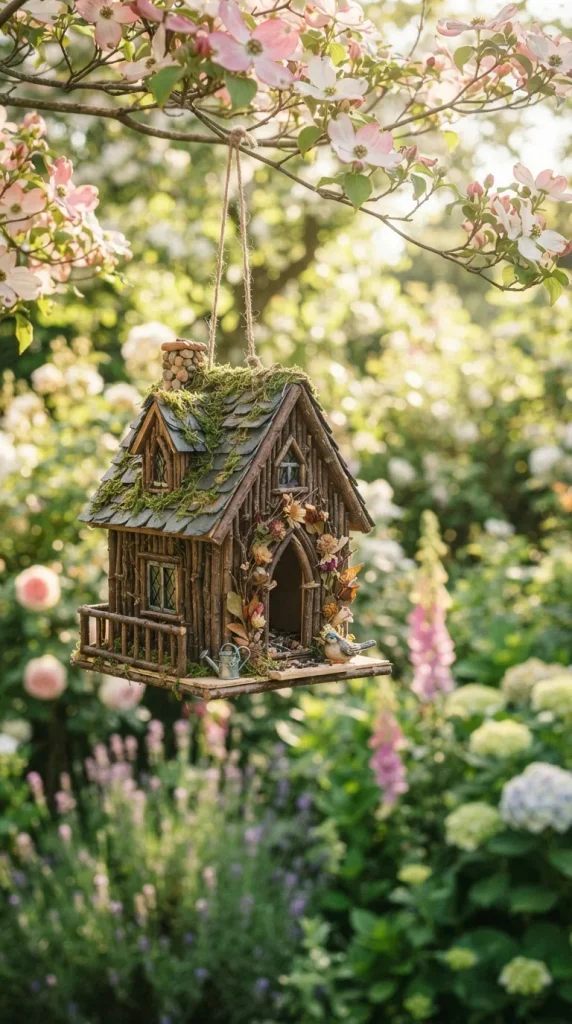
1. The Rustic Miniature Timber Cabin
Transform a standard cereal box into a charming woodland cabin featuring overlapping faux log siding and a moss-covered gable roof.
- How to Make It: Wrap the sealed cereal box in layers of rolled craft paper or thin twigs glued horizontally to mimic log construction. Cut a wide arched front opening for seed access. Create a pitched roof using two separate cardboard panels glued at a 45-degree angle, covered entirely in preserved green craft moss.
- Tips & Variations: Use dried coffee stirrers or popsicle sticks stained in a rich walnut hue for a polished wood plank effect. Hang using rustic hemp rope wrapped around the chimney base, which can double as a concealed suet block holder.
2. Parisian Vintage Flower Market Cart
Capture the romantic aesthetic of a Parisian street cart, complete with a striped fabric canopy and miniature floral window boxes overflowing with seed-attracting millet sprays.