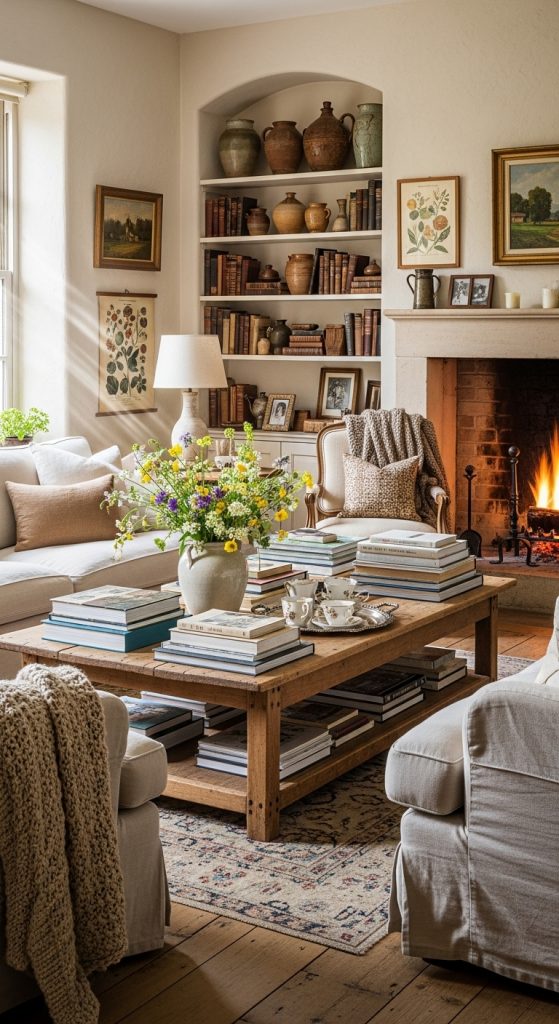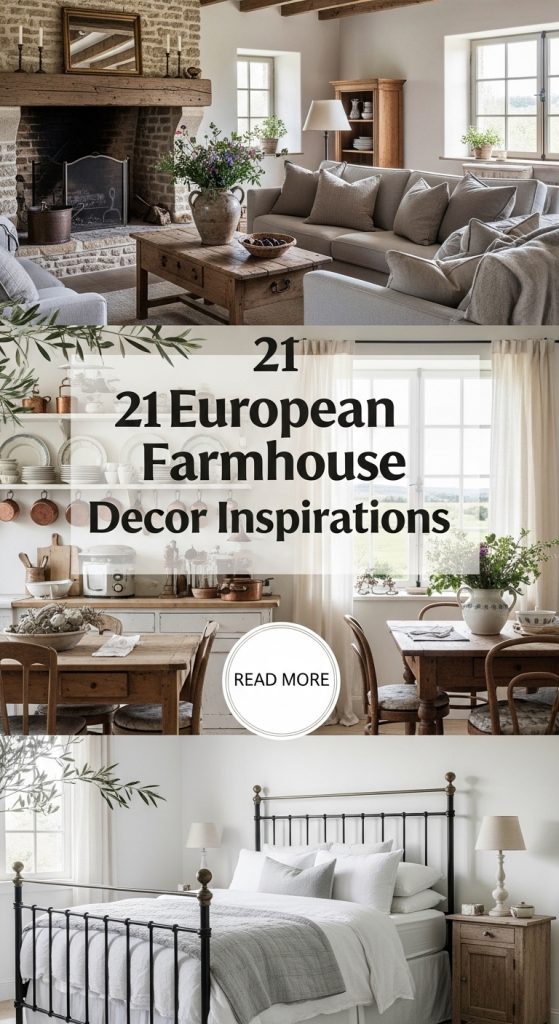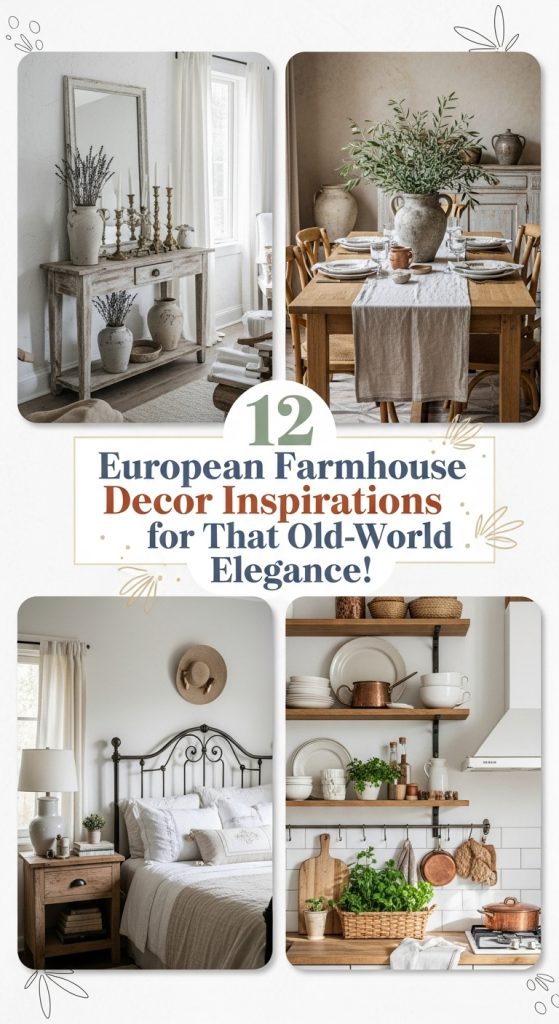
European farmhouse décor is not about trends—it’s about timeless living. Rooted in centuries-old rural traditions across France, Italy, England, Spain, and the countryside of Central Europe, this style brings warmth, authenticity, and soul into a home. It feels collected rather than decorated, worn rather than styled, and deeply connected to nature and craftsmanship.
What makes European farmhouse décor so magical is its effortless balance: rustic but refined, imperfect yet elegant. It celebrates age, texture, and history while remaining practical and livable. From hand-plastered walls to weathered wood beams, every detail whispers stories of generations past.
If you’re dreaming of a home that feels cozy, graceful, and beautifully lived-in, these ten European farmhouse décor inspirations will guide you toward achieving that unforgettable old-world elegance.
1. Weathered Wood Beams and Architectural Charm
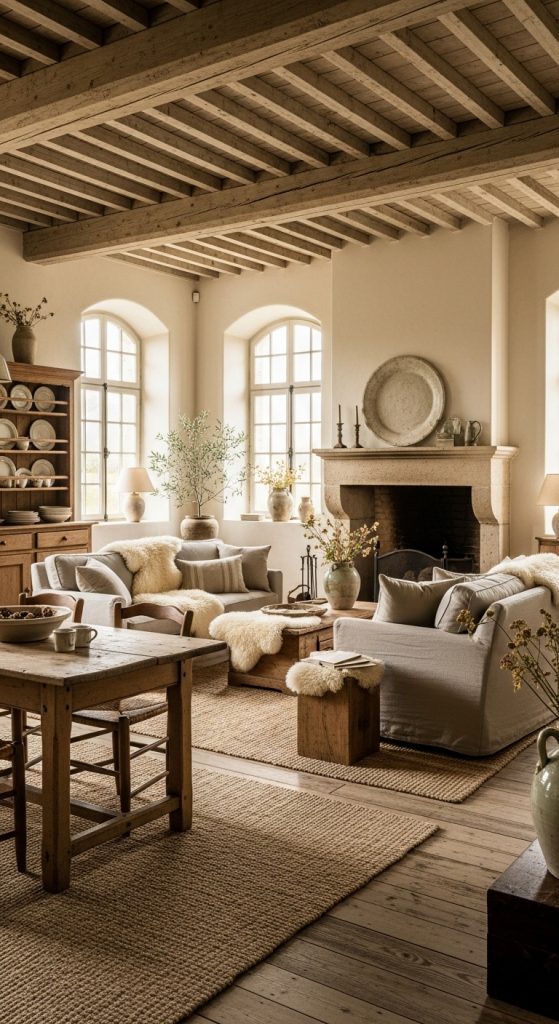
Nothing sets the tone of European farmhouse décor like exposed wooden beams. These beams, often reclaimed or aged naturally over decades, add instant depth and character to ceilings and open spaces. In European farmhouses, beams were never decorative—they were structural—and that authenticity is what makes them so appealing today.
Whether rough-hewn oak beams in a French countryside home or softer chestnut beams in an Italian farmhouse, their natural imperfections create visual warmth. Pair them with lime-washed walls, soft plaster finishes, or muted neutral palettes to let the wood truly shine.
Even in modern homes, faux or reclaimed beams can recreate that heritage look, making the space feel grounded, historic, and welcoming without overwhelming the room.
2. Soft Neutral Palettes Inspired by Nature
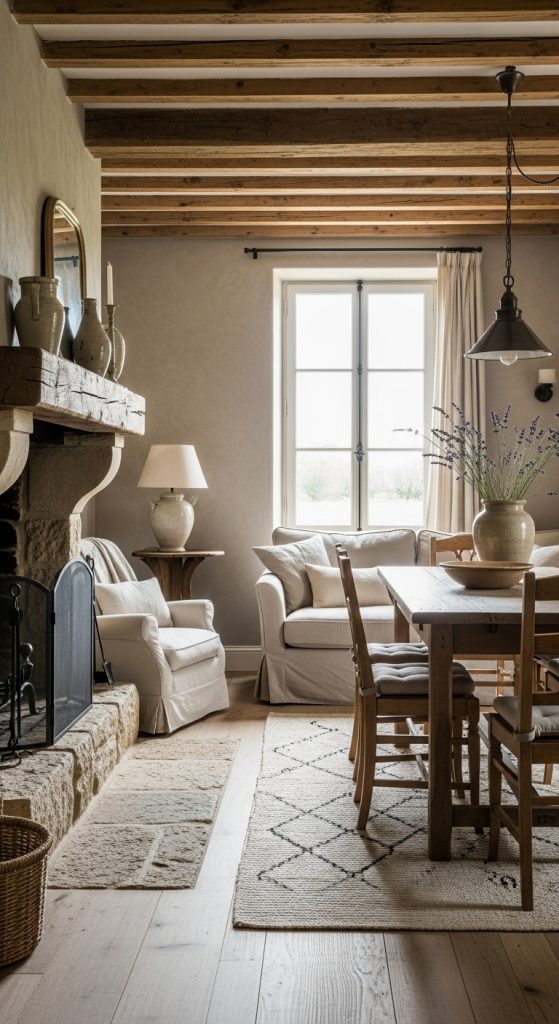
European farmhouse interiors rely heavily on calming, earthy colors. Think warm creams, stone grays, soft taupes, muted sage greens, and dusty blues. These shades reflect the natural surroundings of rural Europe—fields, stone cottages, and cloudy skies.
Walls are rarely stark white. Instead, they feature creamy, chalky tones with subtle texture. Limewash and plaster finishes add depth and softness, allowing light to bounce gently through the space.
This neutral foundation allows furniture, antiques, and textiles to stand out without competing for attention, creating a harmonious and timeless interior.
3. Antique and Timeworn Furniture Pieces
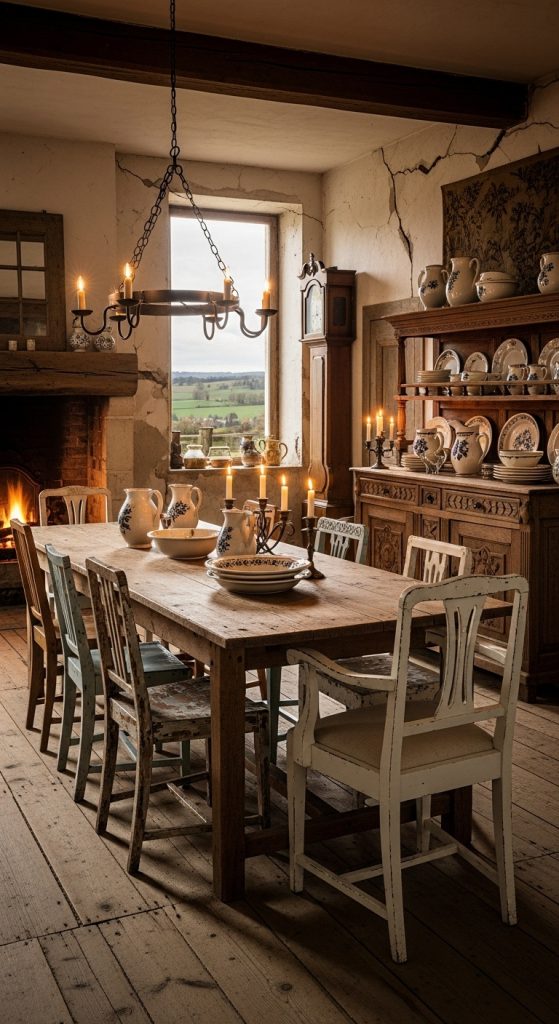
Old-world European farmhouse décor thrives on furniture with history. Antique armoires, worn dining tables, distressed sideboards, and vintage cabinets bring soul into a space. Scratches, faded paint, and patina are not flaws—they’re treasured features.
Rather than matching sets, European farmhouses mix pieces collected over time. A French buffet might sit beside an English spindle chair, while an Italian trestle table anchors the room.
This layered approach creates depth and authenticity, making your home feel curated and personal rather than staged.
4. Stone, Brick, and Natural Flooring
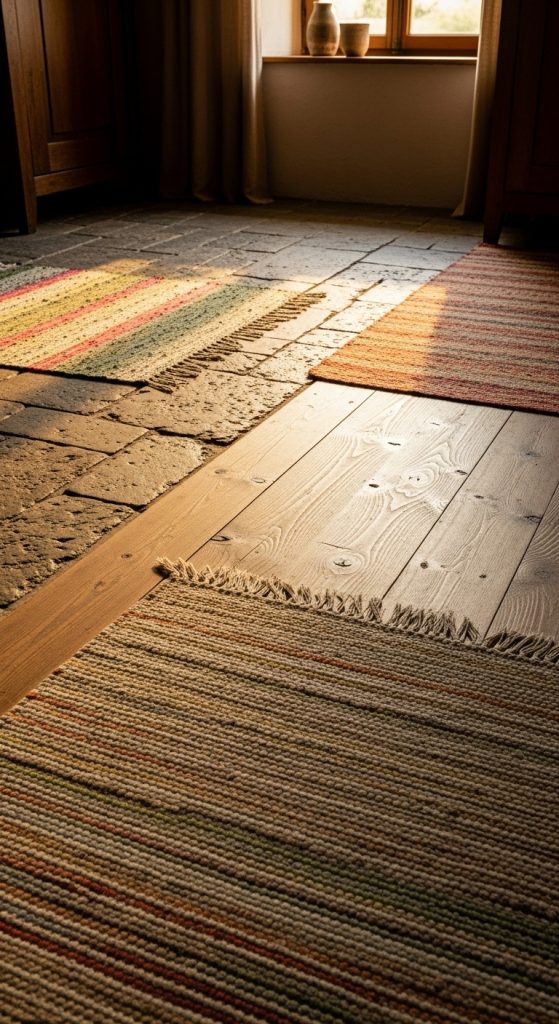
Natural flooring materials are a cornerstone of European farmhouse design. Stone floors, aged terracotta tiles, wide plank wood, and brick flooring add durability and visual interest.
In old European farmhouses, floors were built to last generations, and their worn surfaces tell beautiful stories. Uneven textures and natural color variations enhance the rustic charm.
Layer these hard surfaces with woven rugs, vintage runners, or faded kilims to soften the look while keeping that authentic countryside feel intact.
5. Cozy Linen and Natural Textiles
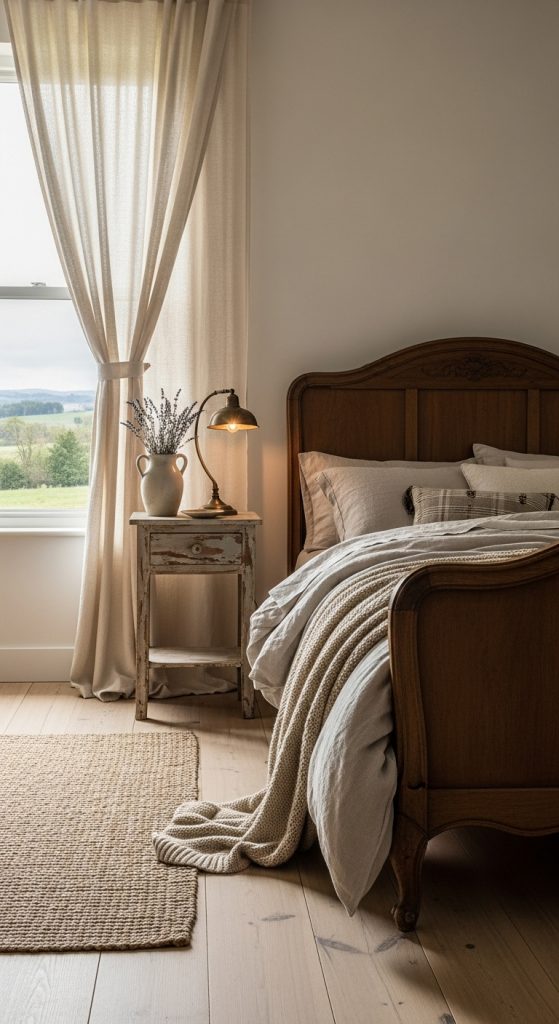
Textiles play a quiet but powerful role in European farmhouse décor. Natural fabrics like linen, cotton, and wool are preferred for their softness, breathability, and organic texture.
Curtains hang loosely and often puddle slightly on the floor. Sofa covers feel relaxed rather than tailored. Bedding layers mix subtle stripes, florals, and solids in neutral or muted tones.
These fabrics add comfort while reinforcing the lived-in elegance that defines old-world European interiors.
6. Rustic Kitchens with Old-World Warmth
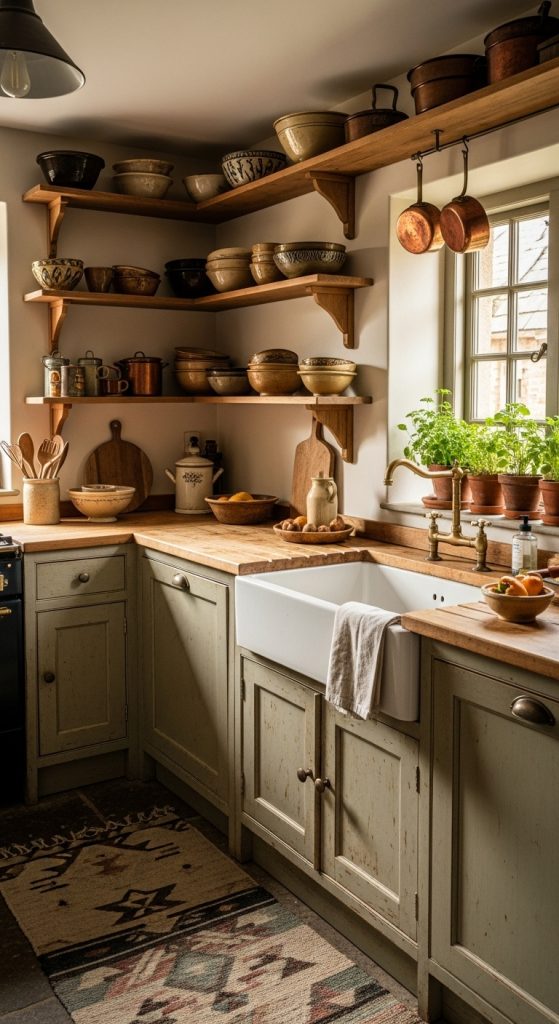
The heart of any European farmhouse is the kitchen. It’s a place of gathering, cooking, and connection. Open shelving filled with pottery, ceramic bowls, copper pans, and everyday dishes replaces sleek cabinetry.
Farmhouse sinks, aged brass or iron hardware, and wooden countertops create warmth and authenticity. Cabinetry is often painted in soft, muted tones or left in natural wood finishes with visible grain.
These kitchens feel functional yet soulful—designed for real life rather than display.
7. Vintage Lighting with Soft Glow
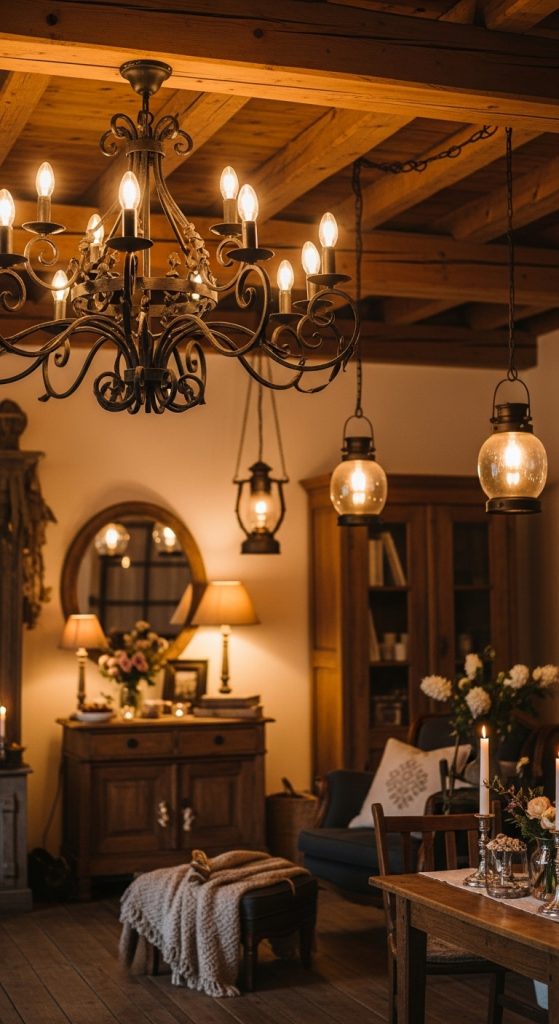
Lighting in European farmhouse décor is subtle and atmospheric. Instead of harsh overhead lights, the focus is on creating a warm glow using vintage-inspired fixtures.
Wrought iron chandeliers, antique lantern pendants, wall sconces, and candle-style lighting bring intimacy and romance into a space. Glass may appear slightly bubbled or aged, enhancing the old-world charm.
The goal is not brightness but ambiance—lighting that invites you to slow down and linger.
8. Handcrafted Details and Artisan Touches
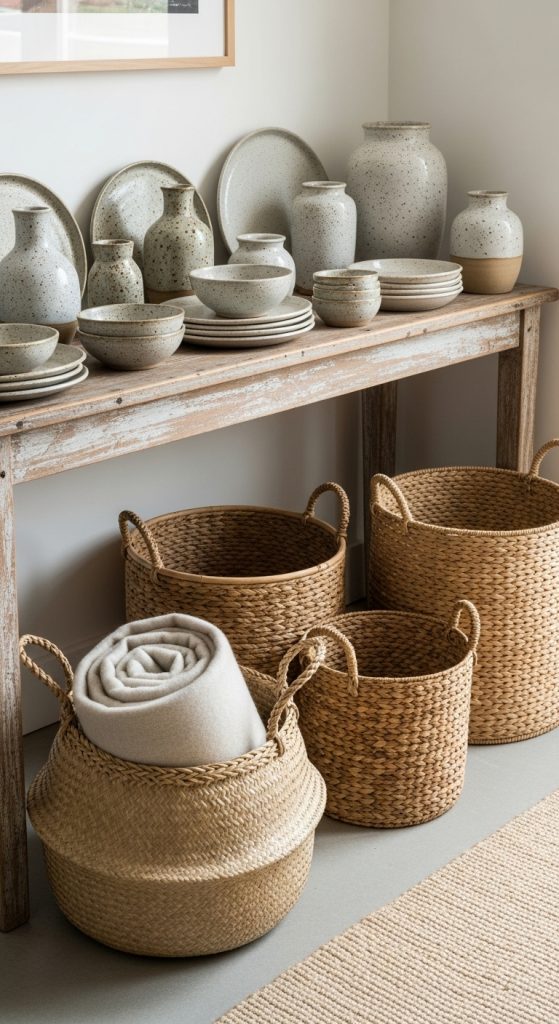
European farmhouses celebrate craftsmanship. Hand-thrown pottery, carved wood accents, woven baskets, and hand-stitched textiles add depth and authenticity.
These artisanal details honor traditional skills passed down through generations. Display them openly—on shelves, walls, or tabletops—so they become part of the home’s story.
Even small handmade elements can elevate a space, reminding us that beauty often lies in simplicity and skill.
9. Old-World Bathrooms with Rustic Elegance
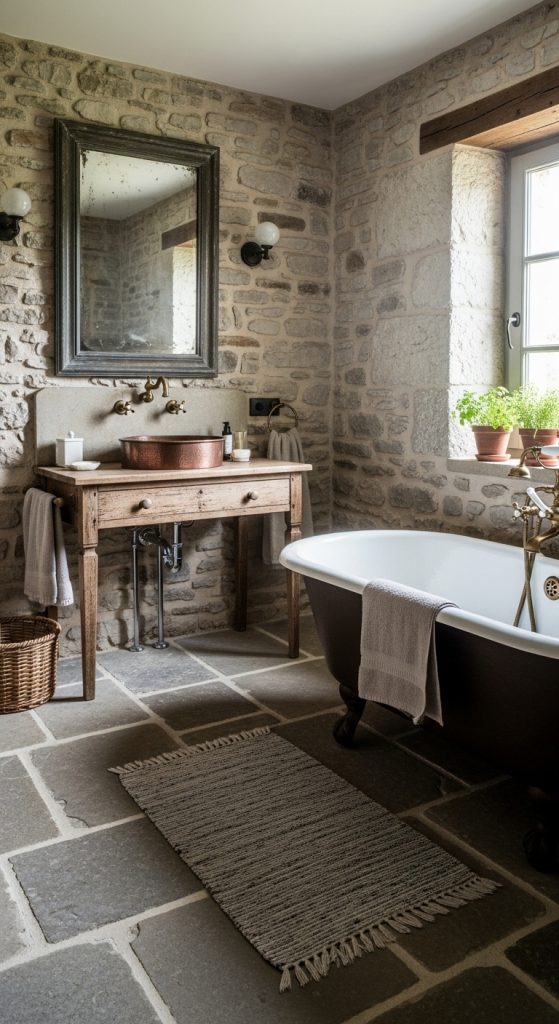
Bathrooms in European farmhouse homes feel like private sanctuaries. Freestanding tubs, stone or plaster walls, antique vanities, and aged mirrors create a spa-like atmosphere rooted in tradition.
Fixtures often feature aged brass, oil-rubbed bronze, or iron finishes. Natural materials dominate, keeping the space serene and grounded.
Soft lighting and simple accessories ensure the bathroom remains calm, timeless, and effortlessly elegant.
10. Lived-In Styling and Collected Decor
The final and most important element of European farmhouse décor is the feeling of life within the home. Books stacked casually, baskets filled with linens, fresh or dried flowers in ceramic vases, and meaningful objects scattered throughout.
Nothing feels overly styled. Everything feels intentional yet relaxed. This approach transforms a house into a home—warm, welcoming, and deeply personal.
European farmhouse décor is not about perfection. It’s about comfort, history, and beauty that grows richer with time.