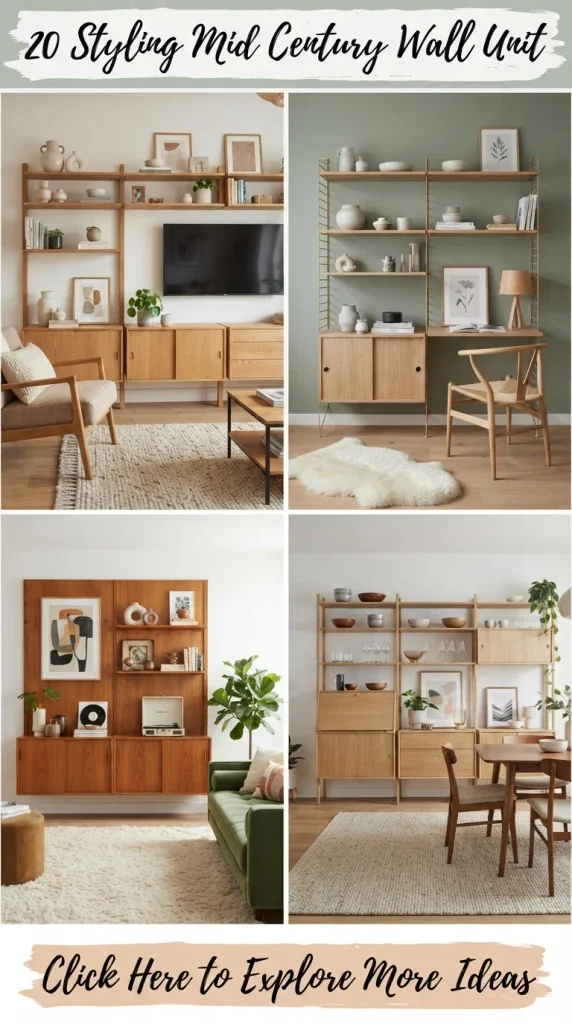
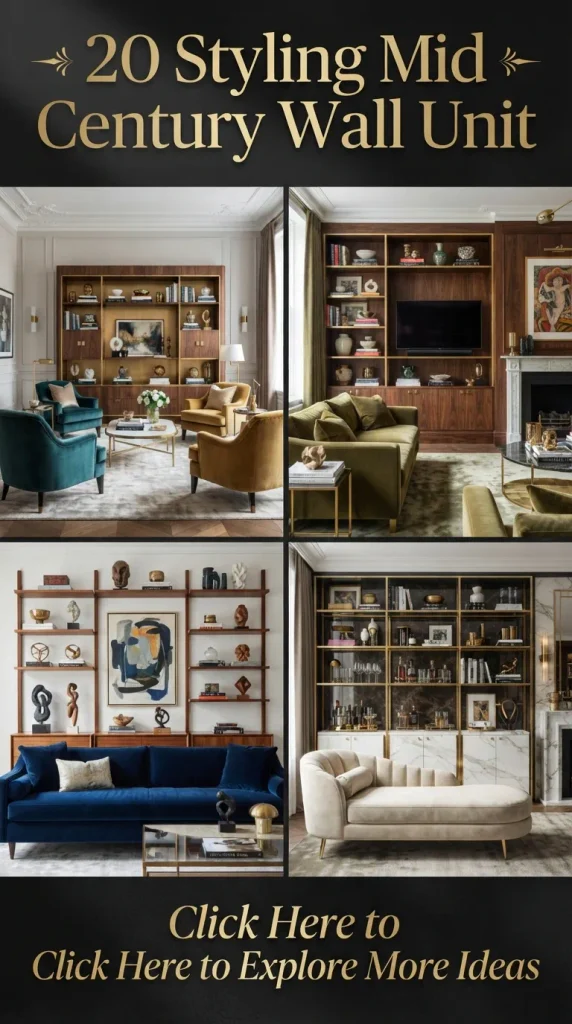
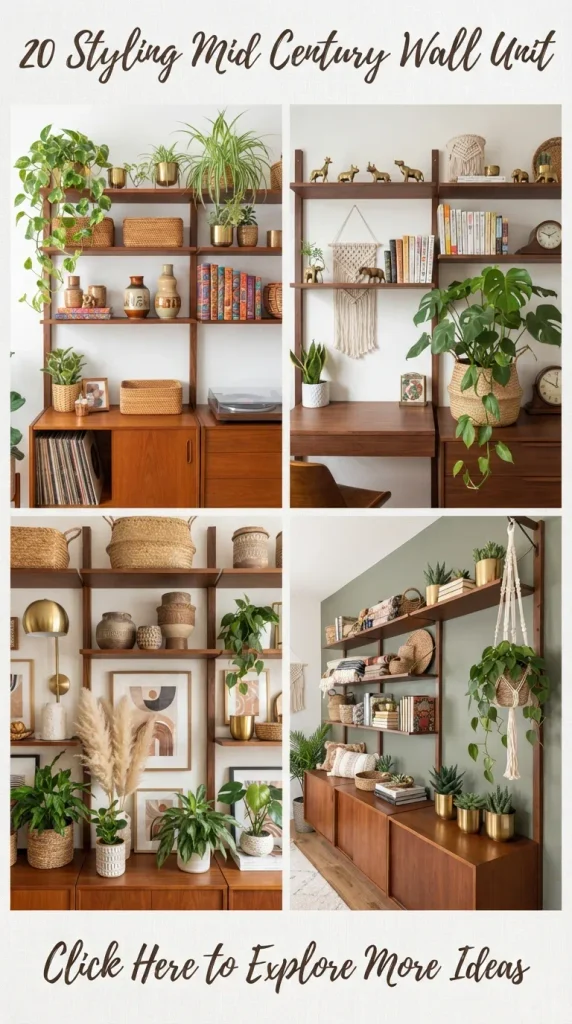
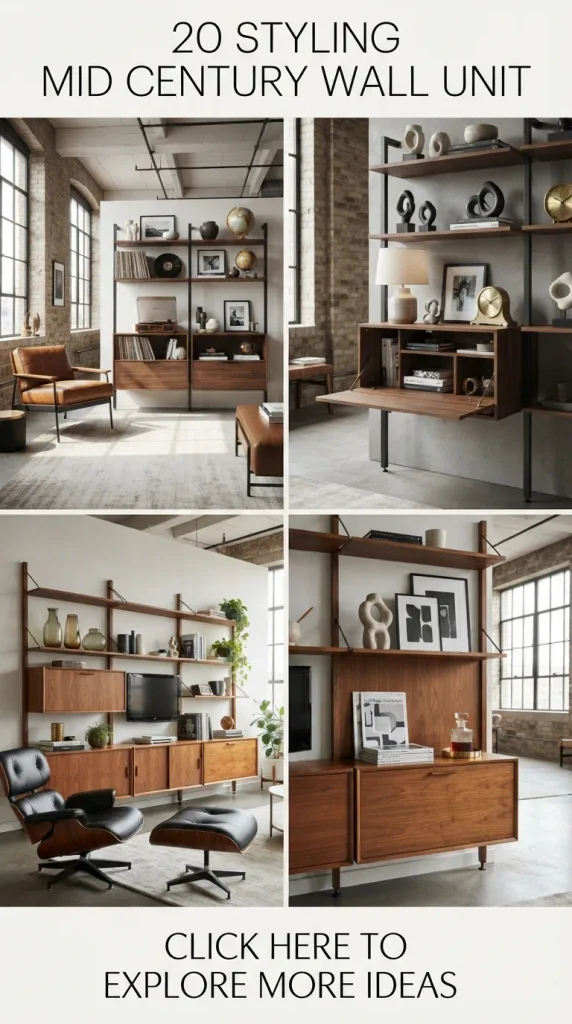
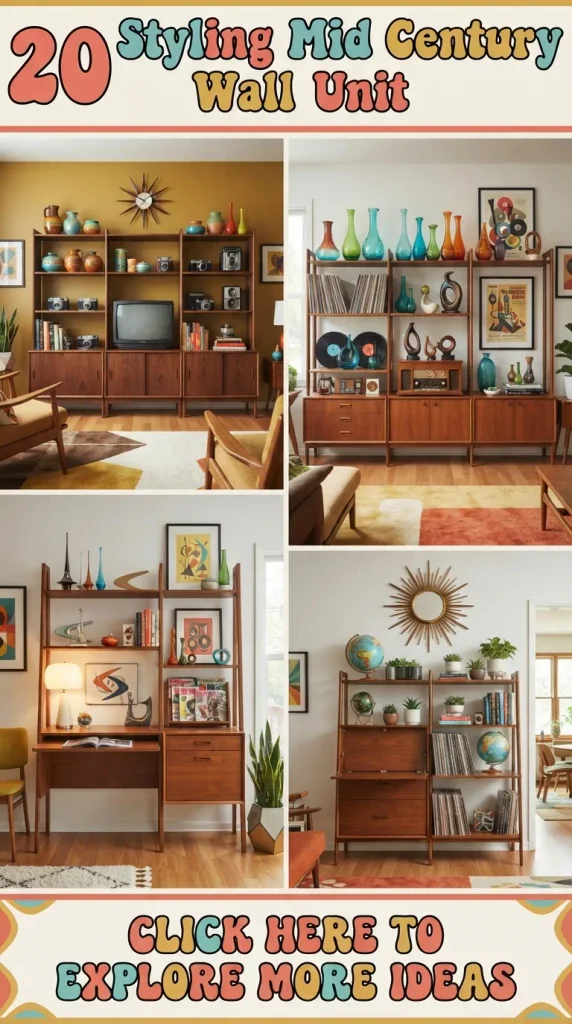
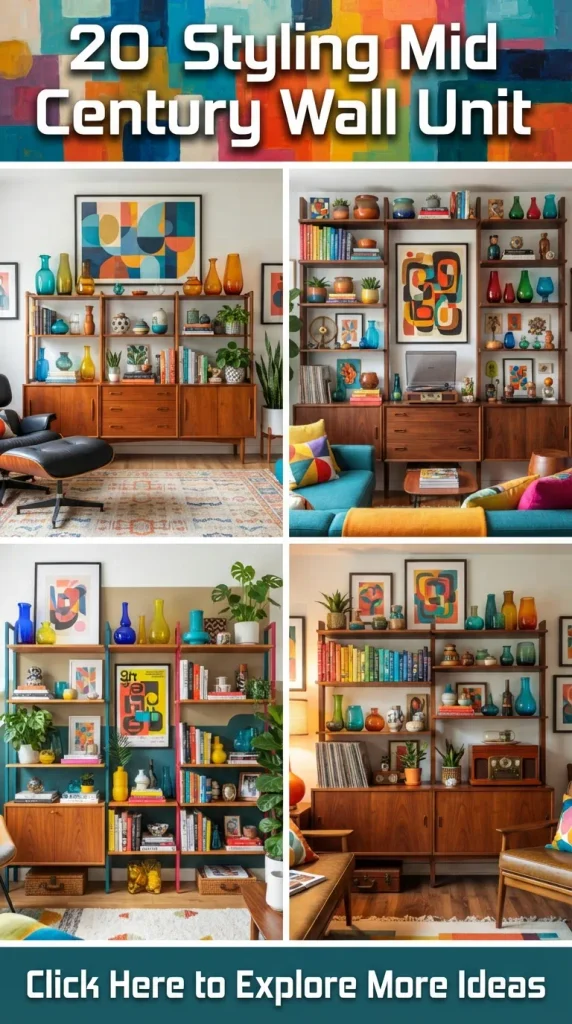
The mid-century modern aesthetic remains a timeless pillar of interior design, characterized by clean lines, organic shapes, rich wood tones, and a harmonious balance between functionality and artistic expression. Among the most impactful statement pieces in this design vocabulary is the mid-century wall unit. Far more than mere storage, a well-styled wall unit serves as the architectural heartbeat of a room—a curated gallery where personal history, design theory, and everyday utility intersect.
Whether you are working with an authentic vintage teak credenza, a modular walnut shelving system, or a sleek contemporary interpretation, transforming this space requires a thoughtful eye. This comprehensive guide explores 20 breathtaking styling concepts for your mid-century wall unit. Each idea is broken down into its core philosophy, step-by-step styling instructions, expert tips, material requirements, and a dedicated 9:16 high-resolution visual prompt placed conveniently at the end of the article.
1. The Architectural Symmetry Statement
Introduction and Meaning
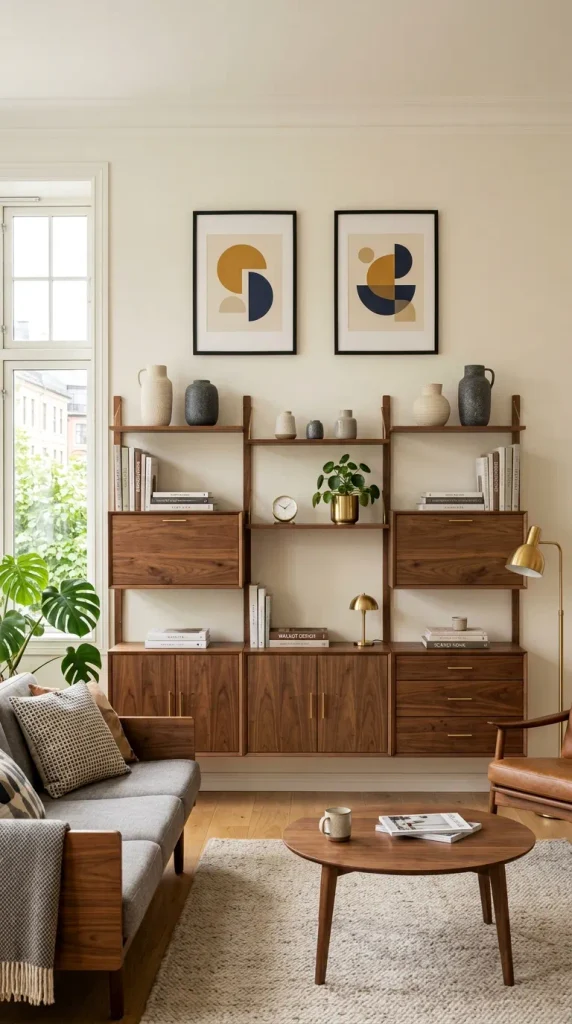
The Architectural Symmetry Statement is rooted in the classical mid-century belief that order brings tranquility to a living space. This styling approach utilizes balanced weights, matching heights, and mirrored arrangements across the vertical and horizontal planes of the wall unit. It communicates intentionality, sophistication, and a calm, collected environment.
How to Make It
- Establish a Central Axis: Find the exact center of your wall unit and place your largest foundational anchor piece—such as a large piece of framed abstract art or a symmetrical clock—right in the middle.
- Mirror the Outer Edges: Select two matching medium-sized decorative objects, like identical ceramic urns or matching brass candlesticks, and place them on opposite outer shelves at equivalent heights.
- Layer Inner Balances: Fill the intermediate gaps with books stacked vertically on one side and horizontally on the other, ensuring the visual “weight” feels evenly distributed.
- Step Back and Evaluate: Squint at the unit from across the room to check if one side feels heavier or pulls the eye more than the other. Adjust smaller items until equilibrium is reached.
Tips and Variations
- Keep color palettes tightly controlled to two or three primary tones (e.g., walnut, matte black, and brass) to enhance the clean, architectural effect.
- Avoid overcrowding; let the negative space around symmetrical items breathe.
- Variation: Introduce subtle asymmetry on the bottom tier while keeping the top tier strictly symmetrical for a modern twist.
Needs to Make That Thing
- Two identical ceramic vases in a muted earth tone.
- A large rectangular abstract art print with a thin walnut frame.
- Two stacks of hardcover books with monochromatic spines.
- A pair of solid brass taper candle holders.
2. The Organic Botanical Sanctuary
Introduction and Meaning
Bringing the outdoors inside was a defining tenet of 1950s and 1960s architecture, championed by designers who used expansive windows and indoor planters to merge nature with living spaces. The Organic Botanical Sanctuary treats your wall unit as a living greenhouse, celebrating lush greenery, natural textures, and organic forms that soften the rigid geometry of wooden shelving.
How to Make It
- Incorporate Trailing Plants: Place cascading plants, such as a pothos or string of hearts, on the top shelf, allowing their vines to drape gracefully down the vertical pillars of the unit.
- Vary Foliage Textures: Mix broad-leafed plants (like a miniature monstera or calathea) with structured, spiky plants (like snake plants) to create dynamic silhouette contrasts.
- Choose Earthen Vessels: House your plants in terracotta, raw ceramic, or speckled stone pots rather than shiny plastic containers.
- Integrate Natural Elements: Intersperse polished river stones, petrified wood bookends, or a piece of driftwood among the plant pots.
Tips and Variations
- Ensure your shelf locations receive adequate natural or artificial grow-light exposure to keep your botanical display thriving.
- Keep watering routines manageable by using saucers hidden beneath decorative pots to protect your wooden unit from moisture damage.
- Variation: Focus entirely on dried botanicals, pampas grass, and palm spears for a low-maintenance, textural aesthetic.
Needs to Make That Thing
- Three to four varying indoor plants in handcrafted ceramic planters.
- A piece of weathered driftwood.
- Two heavy stone bookends.
- A brass plant mister for daily maintenance.
3. The Vintage Vinyl & Audio Lounge
Introduction and Meaning
The mid-century era was the golden age of hi-fi culture, where listening to music was an immersive, intentional ritual. The Vintage Vinyl & Audio Lounge styling concept transforms your wall unit into a functional listening station that celebrates analog warmth, album art history, and retro audio equipment.
How to Make It
- Designate a Turntable Tier: Dedicate the most easily accessible flat surface of your credenza or lower wall unit to your record player and pre-amp.
- Curate an Album Display: Use specialized wooden display stands to showcase three to four iconic album covers featuring striking mid-century graphic design.
- Organize Vinyl Records: Group your record collection vertically in heavy-duty dividers or lower open compartments, organizing them by genre or alphabetical order.
- Style Supporting Accessories: Add retro headpohnes on a sleek stand or a vintage glass ashtray used as a catch-all for small cleaning brushes and adapters.
Tips and Variations
- Keep cords meticulously managed using clips behind the unit to maintain a clean, uncluttered look.
- Rotate your displayed album covers seasonally or weekly to change the mood of the room.
- Variation: Mix in vintage cassette tapes or reel-to-reel aesthetic accents if you want an even more authentic retro tech vibe.
Needs to Make That Thing
- A retro-styled turntable with a wooden veneer base.
- Three wooden record display ledges.
- A curated collection of vintage vinyl records in pristine sleeves.
- A minimalist brass headphone stand.

4. The Minimalist Art Gallery
Introduction and Meaning
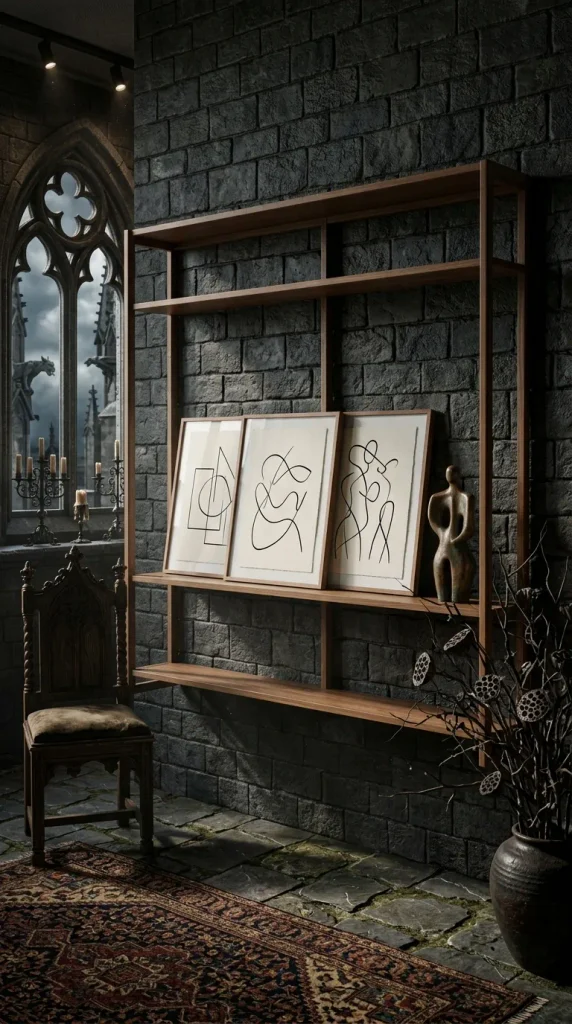
Less is profoundly more in this minimalist gallery approach. By treating your mid-century wall unit as a high-end art gallery wall, you allow individual pieces of fine art, sculptural objects, and rare books to command complete attention through purposeful isolation and generous negative space.
How to Make It
- Clear the Canvas: Remove all standard knick-knacks, books, and clutter from the shelves, leaving only the bare wood exposed.
- Select Statement Art: Choose two or three striking, museum-quality framed art pieces (line drawings, minimalist color field paintings, or architectural sketches).
- Lean, Don’t Hang: Prop the frames securely against the back panel of the shelves rather than hanging them, creating a casual, studio-like atmosphere.
- Add Solo Sculptures: Place a single, highly expressive sculptural object (such as a cast bronze hand or a carved wooden bird) on an adjacent shelf as a standalone focal point.
Tips and Variations
- Stick to a restrained color palette in the artwork, such as warm neutrals, ochre, terracotta, and charcoal.
- Ensure proper lighting—consider slim, warm-toned LED strip lights tucked discreetly under the shelf above to illuminate the art.
- Variation: Feature black-and-white architectural photography printed on matte archival paper.
Needs to Make That Thing
- Two minimalist framed prints with wide, off-white matte borders.
- A single abstract ceramic sculpture with smooth curves.
- A microfiber cleaning cloth to keep glass frames pristine.
- Invisible picture-ledge props to secure leaning frames safely.

5. The Warm Retro Amber Glow
Introduction and Meaning
Mid-century modern design is deeply connected to the warm, amber tones of teak, walnut, and smoked glass. The Warm Retro Amber Glow styling concept leans entirely into this nostalgic color spectrum, curating amber glassware, cognac leather accents, and golden lighting to create an exceptionally cozy, inviting ambiance.
How to Make It
- Gather Amber Glassware: Collect vintage Empoli glass decanters, swung vases, or apothecary bottles in shades of amber, honey, and rust.
- Arrange by Translucency: Place these glassware pieces on shelves where sunlight or accent lighting can pass directly through them, casting colored light patterns.
- Incorporate Rich Leather: Add small leather-bound journals, a vintage leather catch-all tray, or brass objects with a deep golden patina.
- Introduce Warm Illumination: Place a small, globe-style accent lamp with an amber or smoked glass shade directly onto one of the middle shelves.
Tips and Variations
- Combine different heights of glassware to create a dynamic skyline effect across the shelving unit.
- Pair amber items with cool matte black accessories to make the golden tones pop even more.
- Variation: Focus heavily on mid-century barware elements like vintage cocktail shakers and amber highball glasses.
Needs to Make That Thing
- Three vintage amber glass decanters of varying shapes.
- A small mid-century globe table lamp with a brass base.
- A cognac leather storage box or tray.
- Two brass animal figurines with polished finishes.

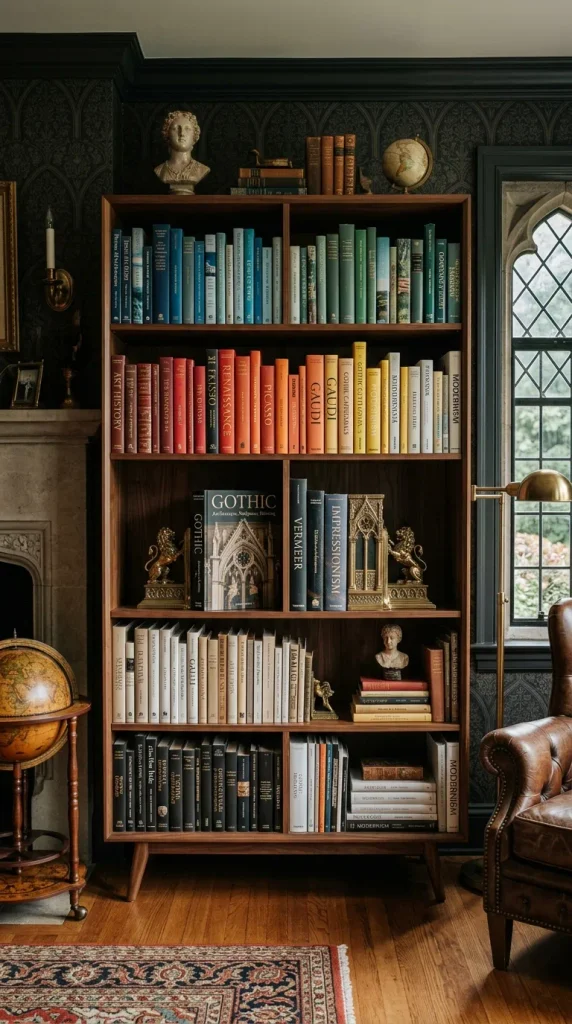
6. The Book Lover’s Literary Haven
Introduction and Meaning
For the voracious reader, a mid-century wall unit provides the ultimate architectural bookshelf. The Literary Haven style celebrates the tactile beauty of books, arranging them not just for reading accessibility, but as rich blocks of color, texture, and intellectual depth.
How to Make It
- Mix Vertical and Horizontal Stacks: Break up long, monotonous rows of upright books by placing horizontal stacks of three to five books topped with a small decorative object.
- Color-Coordinate or Spine-Face: Organize books by color family for a striking aesthetic gradient, or turn select books spine-in for a rustic, neutral paper-bag texture effect.
- Incorporate Heavy Bookends: Use solid marble, brass, or carved wood bookends to anchor book groups and prevent tipping.
- Layer Front-Facing Art Books: Place large-format art monographs face-out on low shelves or book easels to display their stunning cover designs.
Tips and Variations
- Dust your books and shelves regularly using a soft-bristled brush attachment to keep your literary collection looking fresh.
- Mix vintage paperback editions with modern hardcover releases for added textural variety.
- Variation: Group books by genre (e.g., mid-century architecture, poetry, classic fiction) with custom brass label holders on the shelves.
Needs to Make That Thing
- A diverse collection of classic literature and design monographs.
- A pair of heavy solid-brass geometric bookends.
- Two wooden book display easels.
- A feather duster specifically designated for shelf maintenance.



7. The Eames-Era Collector’s Cabinet
Introduction and Meaning
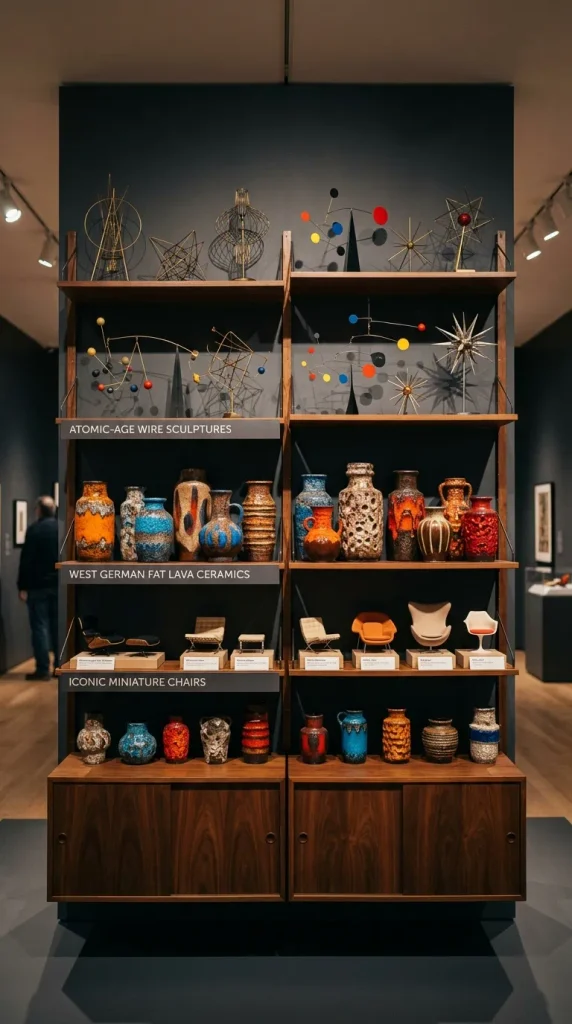
This styling concept honors the iconic designers and manufacturers of the mid-century movement (such as Eames, Nelson, Saarinen, and Wegner). It treats your wall unit as a curated museum showcase for miniature design masterpieces, atomic-era objects, and iconic collectibles.
How to Make It
- Feature Miniature Masterpieces: Display licensed miniature versions of iconic mid-century chairs (like the Eames Lounge Chair or the Panton Chair) on prominent eye-level shelves.
- Include Atomic Motifs: Add starburst clocks, boomerangs, or atomic-age brass mobile sculptures that capture the scientific optimism of the 1950s.
- Incorporate Cerámica de Lujo: Place authentic lava-glazed West German fat-lava ceramics or Scandinavian art pottery on display.
- Keep Objects Sparse: Let each collectible stand alone so its unique silhouette is clearly visible from across the room.
Tips and Variations
- Research the provenance of your collected pieces to share fascinating design history stories with guests.
- Ensure heavier ceramic pieces are placed on sturdy lower shelves rather than fragile upper ledges.
- Variation: Curate a collection focused exclusively on Scandinavian wooden animal figures and teak sculptures.
Needs to Make That Thing
- A miniature designer lounge chair replica.
- A vintage West German fat-lava ceramic vase.
- An abstract brass atomic-age wire sculpture.
- A small framed vintage magazine advertisement from 1958.
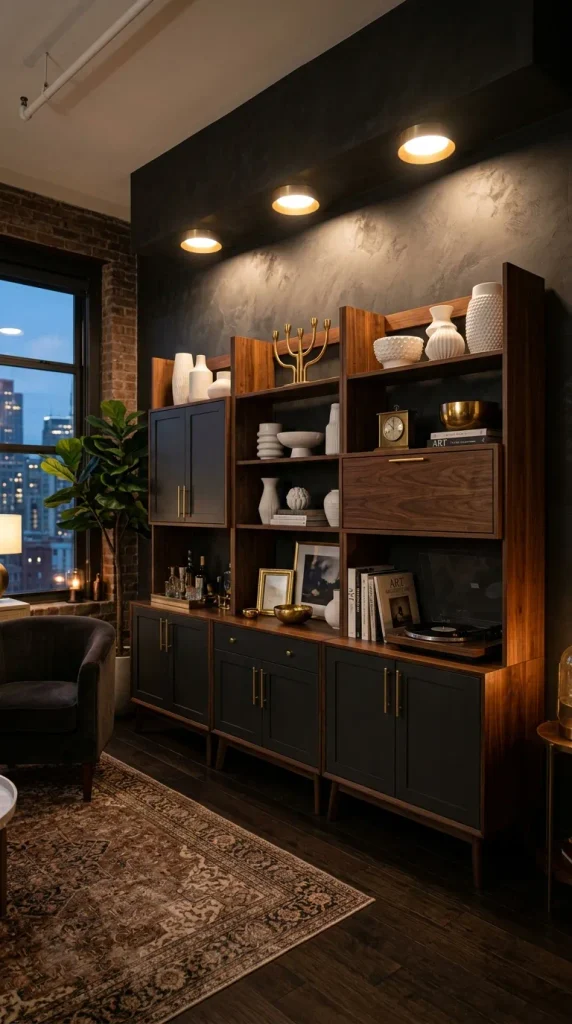
8. The Moody Charcoal & Walnut Contrast
Introduction and Meaning
While mid-century decor often relies on light woods and bright pastels, injecting deep, moody hues creates high drama and modern sophistication. The Moody Charcoal & Walnut Contrast concept pairs rich dark wood shelving with matte black accessories, charcoal grey backdrops, and gleaming metallic accents.
How to Make It
- Darken the Back Panel: If possible, paint or line the back wall of your shelving unit in a deep charcoal, matte black, or dark olive green hue to create dramatic contrast.
- Select High-Contrast Decor: Fill the shelves with stark white ceramics, polished brass objects, and dark bronze sculptures that pop against the moody backdrop.
- Introduce Textured Fabrics: Fold a black linen table runner or place a dark woven textile basket on a lower shelf to break up hard surfaces.
- Use Focused Spotlighting: Install directional mini puck lights at the top of the unit to cast dramatic shadows downward.
Tips and Variations
- Ensure your room has adequate ambient lighting elsewhere so the dark unit enhances the space rather than making it feel heavy.
- Perfect for contemporary urban apartments or moody library dens.
- Variation: Use deep navy blue as the primary accent color instead of charcoal for a maritime-inspired mid-century look.
Needs to Make That Thing
- Matte black ceramic vases with organic textures.
- Solid brass bowls and candle holders for metallic reflection.
- White porcelain sculptural objects.
- Removable dark charcoal wallpaper or matte paint for the unit’s backing.
9. The Tactile Textile & Macramé Display
Introduction and Meaning
Mid-century interior design was deeply tactile, incorporating woven elements, shag rugs, macramé wall hangings, and textured wall coverings to create acoustic warmth and visual depth. This styling concept weaves soft fiber arts directly into your wooden wall unit.
How to Make It
- Drape Woven Tapestries: Hang a small vintage woven wool wall hanging or a modern geometric macramé piece over the side or back panel of the shelving unit.
- Incorporate Basketry: Use flat woven rattan baskets or seagrass trays vertically as decorative backing plates behind smaller objects.
- Add Fabric-Bound Boxes: Store loose items in fabric-wrapped or linen-covered storage boxes to conceal clutter while adding soft texture.
- Mix Hard and Soft: Ensure every soft textile element is balanced right next to a hard element, such as a ceramic mug or a metal sculpture.
Tips and Variations
- Keep natural fibers clean by vacuuming them gently with a brush attachment once a month.
- Stick to a warm, earthy color palette of jute, cream, rust, and mustard yellow.
- Variation: Showcase hand-woven cushion covers or folded vintage Pendleton wool blankets on a wide open shelf.
Needs to Make That Thing
- A small geometric woven wall hanging.
- Two flat rattan decorative plates.
- Linen-covered storage boxes with leather pull tabs.
- A textured wool table runner draped across the base.
10. The Graphic Black & White Studio
Introduction and Meaning
Drawing inspiration from mid-century graphic design masters like Paul Rand and Saul Bass, this styling approach relies entirely on high-contrast black and white geometry, bold typography, and striking linework to create a clean, modern, and artistic statement.
How to Make It
- Curate Monochrome Prints: Display black-and-white architectural line art, typography posters, or geometric Bauhaus prints in sleek black frames.
- Incorporate White Ceramic: Fill shelves with crisp white porcelain vases, sculptural pitchers, and minimalist mugs.
- Add Black Iron Accents: Use wrought iron candle holders, black wire baskets, and dark steel bookends.
- Create Rhythmic Patterns: Arrange black and white items in alternating patterns across shelves to establish a visual rhythm.
Tips and Variations
- Introduce a single splash of a bold primary color—such as a bright red apple sculpture or a primary yellow vase—to pay homage to modernist art movements.
- Keep all frames uniform in thickness and finish for a cohesive gallery feel.
- Variation: Feature vintage black-and-white photography of mid-century architectural masterpieces.
Needs to Make That Thing
- Three minimalist black-framed typography or abstract art prints.
- Pure white matte ceramic vessels.
- Wrought iron geometric candle stands.
- A stack of high-contrast design books.
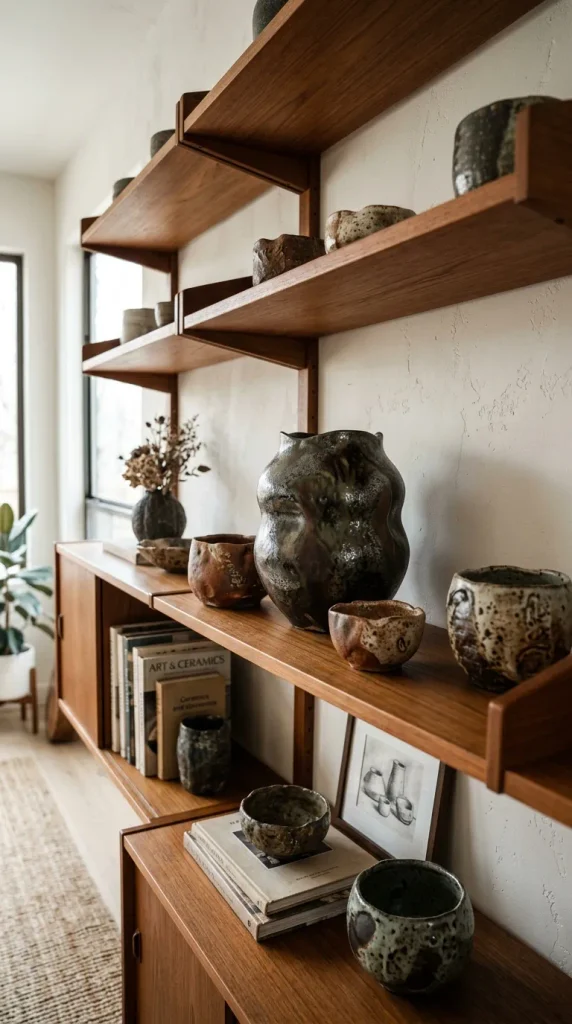
11. The Sculptural Ceramics Museum
Introduction and Meaning
Mid-century studio pottery is renowned for its organic, irregular shapes, speckled glazes, and tactile surfaces. The Sculptural Ceramics Museum concept treats your wall unit as a dedicated showcase for handcrafted pottery, celebrating the beauty of the artisan’s hand.
How to Make It
- Group by Glaze and Era: Gather pottery pieces with similar earthy glazes (such as lava glazes, oatmeal flecks, or deep cobalt blues) and cluster them together.
- Vary Vessel Silhouettes: Mix tall, slender bud vases with wide, low bowls and rounded pitchers to create a diverse skyline of clay.
- Elevate Key Pieces: Place your most prized ceramic vessel on a small wooden riser or stack of books to give it elevated prominence.
- Leave Breathing Room: Ensure each piece of pottery has ample space around it so its unique handle, spout, or texture can be appreciated without visual competition.
Tips and Variations
- Never overcrowd ceramic pieces; they need negative space to look like gallery artifacts rather than kitchen storage.
- Inspect vintage pottery for hairline cracks before displaying them on high shelves.
- Variation: Feature unglazed terracotta and bisque ware exclusively for a raw, primitive modern look.
Needs to Make That Thing
- Four to five artisan studio ceramic vases and bowls.
- Small wooden display risers.
- A soft microfiber cloth for dusting delicate glazes.
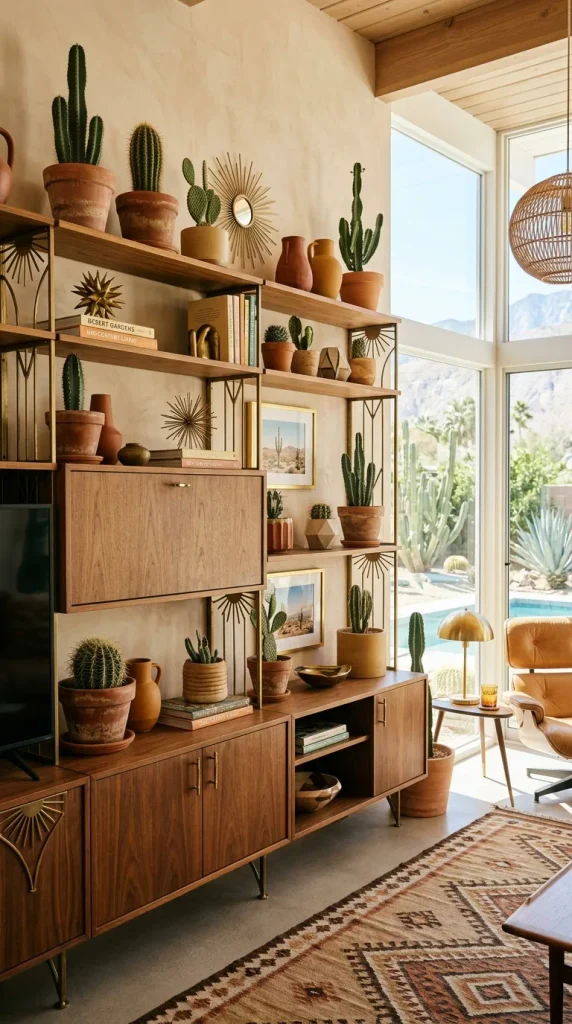
12. The Sunny California Desert Vibe
Introduction and Meaning
Inspired by Palm Springs modernist architecture and desert landscapes, this styling concept infuses your wall unit with sun-bleached tones, cacti, warm terracotta, and carefree optimism. It brings an airy, bright, and vibrant energy into your living room.
How to Make It
- Incorporate Desert Flora: Place small potted cacti, succulents, or air plants in geometric brass or terracotta pots on top shelves.
- Use Sun-Washed Colors: Introduce decorative objects in terracotta, sandy beige, burnt orange, and soft turquoise.
- Add Metallic Brass Highlights: Incorporate sunburst mirrors, brass animal sculptures, and golden trinket trays that reflect warm sunlight.
- Display Travel Memories: Feature vintage postcards or framed photography of Palm Springs desert motels and mid-century architecture.
Tips and Variations
- Ensure succulent plants get adequate light or substitute high-quality faux desert plants if your wall unit is far from windows.
- Keep the overall styling light, relaxed, and uncluttered.
- Variation: Focus heavily on turquoise and copper accents reminiscent of Southwestern modernist jewelry design.
Needs to Make That Thing
- Small potted succulents in geometric planters.
- A brass sunburst decorative accent.
- Burnt orange and sand-colored ceramic dishes.
- Framed vintage Palm Springs architectural photography.
13. The Retro Bar & Entertaining Station
Introduction and Meaning
In the 1950s, the home bar became a symbol of hospitality, sophistication, and social leisure. Transforming a section of your mid-century wall unit into a chic cocktail station adds incredible functional utility while offering fantastic styling opportunities with crystal, brass, and vintage glassware.
How to Make It
- Designate the Credenza Top: Use the main surface of a credenza-style wall unit as your primary mixing and serving station.
- Display Barware Elegance: Arrange crystal decanters filled with spirits, a vintage cocktail shaker, and a set of gold-rimmed lowball glasses on a mirrored or brass serving tray.
- Incorporate Bar Accessories: Add a wooden muddler, a jigger, and cocktail napkins neatly tucked into a sleek ceramic holder.
- Style the Backdrop: Lean a framed retro cocktail recipe print or a small vintage bar mirror against the back wall.
Tips and Variations
- Keep liquor bottles dusted and refreshed regularly.
- Add a small glass bowl filled with cocktail napkins or decorative stirrers.
- Variation: Focus on a specialized espresso and coffee brewing station if alcohol is not your preferred entertaining focus.
Needs to Make That Thing
- A polished brass or mirrored bar tray.
- Two crystal spirit decanters with glass stoppers.
- A vintage stainless steel cocktail shaker.
- Gold-rimmed mid-century cocktail glasses.
14. The Neutral Japandi-Mid-Century Fusion
Introduction and Meaning
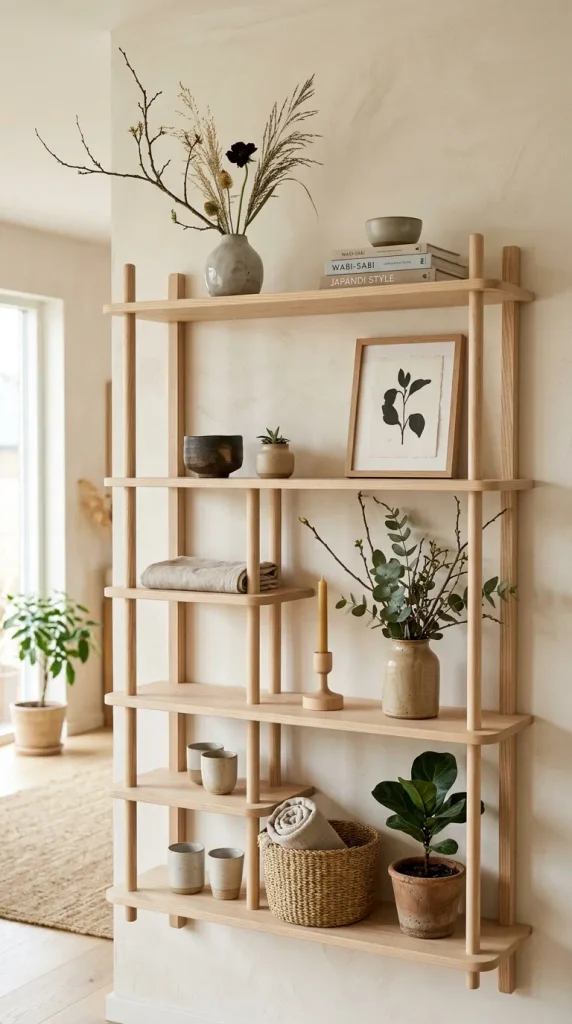
Japandi design—the harmonious blend of Japanese functional minimalism and Scandinavian rustic warmth—shares a deep philosophical kinship with mid-century modernism. This fusion styling concept emphasizes raw woods, clean lines, muted neutrals, and absolute serenity.
How to Make It
- Embrace Wabi-Sabi Imperfections: Feature objects with natural flaws, hand-carved textures, and asymmetric silhouettes that celebrate natural aging.
- Stick to an Organic Neutral Palette: Use oatmeal, warm taupe, raw linen, and pale ash or walnut wood tones exclusively.
- Incorporate Minimalist Ikebana: Create a simple Japanese flower arrangement (Ikebana) using a single branch in a heavy ceramic pin-frog vase.
- Declutter Aggressively: Leave more than half of every shelf completely empty to foster a sense of mindful emptiness and calm.
Tips and Variations
- Use handmade washi paper boxes or minimalist wooden lidded jars for concealed storage.
- Avoid bright, synthetic colors entirely to maintain the tranquil mood.
- Variation: Integrate minimalist calligraphy scrolls or sumi-e ink paintings framed in light oak.
Needs to Make That Thing
- A minimalist ceramic Ikebana vase with a pin frog.
- A single sculptural tree branch.
- Hand-carved wooden lidded storage jars.
- Raw linen decorative objects.



15. The Atomic Era Starburst & Geometric Wonder
Introduction and Meaning
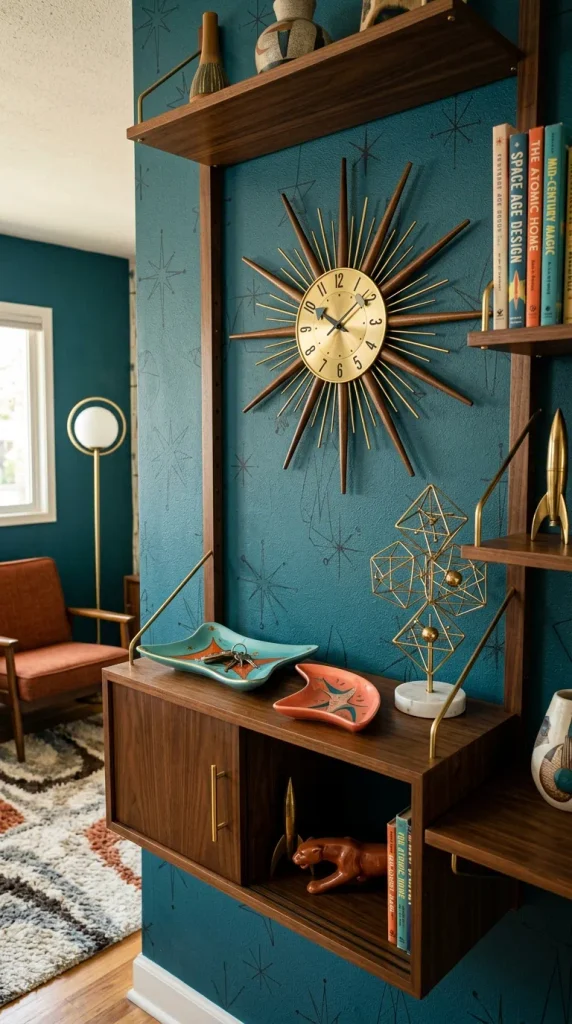
The dawn of the space age heavily influenced mid-century design, introducing atomic symbols, starbursts, boomerangs, and dynamic geometric motifs into everyday decor. This high-energy styling concept celebrates the playful, futuristic optimism of the 1950s.
How to Make It
- Feature Atomic Starbursts: Hang or lean a starburst wall clock or geometric brass wire sculpture as the central anchor of the unit.
- Incorporate Boomerang Shapes: Use boomerang-shaped trinket dishes, ashtrays, or wooden bowls as decorative accents.
- Play with Asymmetric Lines: Style objects that feature angled legs, sweeping curves, and intersecting metal rods.
- Use Retro Color Pops: Introduce splashes of atomic turquoise, mustard yellow, and tangerine orange against neutral shelves.
Tips and Variations
- Keep the geometric theme cohesive without letting the space look chaotic or cluttered.
- Pair bright atomic colors with sleek walnut wood to ground the playful energy.
- Variation: Focus on sputnik-style brass spheres and atomic molecule models.
Needs to Make That Thing
- A mid-century brass starburst wall accent.
- Boomerang-shaped ceramic catch-all trays.
- Geometric wire sculpture in matte black.
- Mustard yellow and turquoise ceramic objects.
16. The Travel & Globe-Trotter Archive
Introduction and Meaning
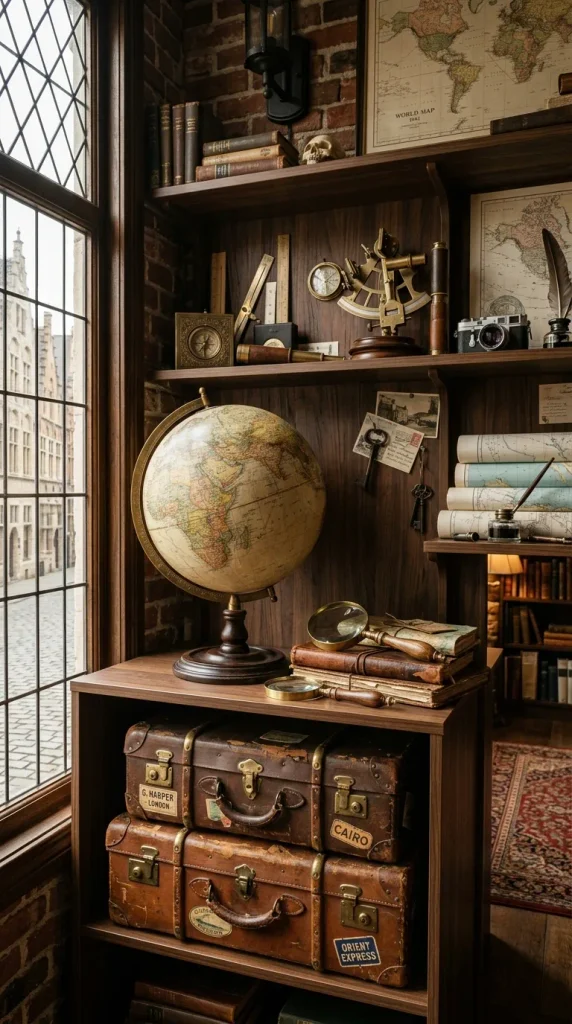
Mid-century modern design coincided with the rise of commercial aviation and global exploration. The Travel & Globe-Trotter Archive styling concept turns your wall unit into a cabinet of curiosities, showcasing vintage globes, brass compasses, leather suitcases, and worldly mementos.
How to Make It
- Anchor with a Vintage Globe: Place an authentic mid-century tabletop globe with aged cartography on a prominent shelf as the ultimate focal point.
- Incorporate Brass Navigational Accents: Add brass magnifying glasses, miniature hourglasses, or vintage brass telescopes.
- Stack Vintage Leather Luggage: Stack two miniature vintage leather suitcases or travel trunks on a lower shelf.
- Display Travel Books: Feature vintage National Geographic issues or leather-bound travel diaries with gold foil lettering.
Tips and Variations
- Mix in unique souvenirs collected from your own travels to give the collection personal meaning.
- Ensure heavy globes are secure and balanced away from shelf edges.
- Variation: Feature vintage airline travel posters reduced to book-plate size in slim walnut frames.
Needs to Make That Thing
- A vintage-style tabletop world globe with a brass stand.
- A brass magnifying glass with a wooden handle.
- Miniature vintage leather storage boxes.
- Leather-bound travel journals.
17. The Warm Terracotta & Clay Earth Tones
Introduction and Meaning
Embracing the earth-baked warmth of the 1970s transition into mid-century styling, this concept floods your shelving unit with rich terracotta, burnt sienna, clay, and raw earthenware textures, creating an exceptionally grounded, cozy atmosphere.
How to Make It
- Cluster Terracotta Vessels: Gather unglazed clay pots, Spanish water jugs, and terracotta candle holders of varying heights.
- Layer Earthy Textures: Mix coarse clay surfaces with smooth leather, woven jute cords, and dark bronze hardware.
- Incorporate Dried Grasses: Fill terracotta urns with dried pampas grass, bunny tails, or wheat stalks for height and feathery texture.
- Use Warm Lighting: Position a lamp with a warm Edison bulb nearby to cast a golden glow across the clay surfaces.
Tips and Variations
- Terracotta is porous; ensure saucers are used if holding live plants to prevent water stains on wooden shelves.
- Combine clay tones with olive green foliage for a stunning natural color pairing.
- Variation: Feature handmade Mexican Talavera pottery tiles or rustic pottery pieces.
Needs to Make That Thing
- Three varying terracotta vases and jugs.
- Dried pampas grass and botanical stems.
- A jute-wrapped glass decorative bottle.
- A bronze sculptural object.
18. The Moody Library & Scholar’s Study
Introduction and Meaning
Evoking the intellectual charm of a mid-century university professor’s study or an executive’s corner office, the Moody Library concept creates an atmosphere of deep concentration, timeless literature, and sophisticated scholarship.
How to Make It
- Pack the Shelves with Books: Fill large sections of the unit densely with leather-bound classics, encyclopedia sets, and scholarly monographs.
- Add Brass Library Lights: Clamp or place a traditional green-shaded banker’s lamp or a slim brass picture light above a key shelf.
- Incorporate Scholar Accessories: Style antique brass magnifying glasses, heavy bronze bookends, a wooden pipe rack, or an antique globe.
- Use Deep Wood Tones: Ensure your unit features dark walnut or mahogany finishes to deepen the scholarly ambiance.
Tips and Variations
- Keep dust managed with regular gentle cleaning since tightly packed book shelves tend to collect dust quickly.
- Pair dark wood with forest green or burgundy accent decor.
- Variation: Feature a collection of vintage fountain pens displayed in a custom wooden tray.
Needs to Make That Thing
- A collection of vintage hardcover books in dark tones.
- A brass banker’s lamp with a green glass shade.
- Heavy bronze bookends.
- An antique brass hourglass.
19. The Sleek Architectural Wire Frame
Introduction and Meaning
Moving away from bulky solid wood cabinets, many mid-century designers (such as George Nelson and String Furniture) pioneered modular wire-frame shelving systems that offered airy transparency and industrial elegance. This styling approach celebrates the delicate structural lines of wire-based units.
How to Make It
- Maintain Transparency: Avoid packing shelves completely solid; allow the metal wire backing and side frames to remain partially visible behind your objects.
- Use Floating Acrylic Trays: Place clear acrylic or lightweight wooden trays on shelves to hold smaller trinkets without adding visual bulk.
- Incorporate Vertical Metal Accents: Use tall, slender brass candlesticks or thin wire sculptures that echo the vertical lines of the shelving structure.
- Balance Heavy Bases: Ground the airy upper wire shelves by placing slightly heavier ceramic or wooden storage boxes on the very bottom tier.
Tips and Variations
- Perfect for smaller rooms where solid wooden wall units might make the space feel cramped.
- Keep color palettes bright and airy to complement the light structure.
- Variation: Use floating glass shelves within the metal wire frame for ultimate transparency.
Needs to Make That Thing
- Slender brass taper candle holders.
- Clear acrylic decorative trays.
- Lightweight ceramic bud vases.
- Minimalist wire sculptures.
20. The Eclectic Mid-Century Curated Mix
Introduction and Meaning
For the true collector who loves a little bit of everything, the Eclectic Mid-Century Curated Mix brings together art, nature, vintage tech, books, and family treasures in a cohesive, highly personalized display that tells a rich, multidimensional story.
How to Make It
- Establish Three Anchors: Place three major focal points across different shelves (e.g., an art piece, a plant, and a vintage object) to guide the viewer’s eye.
- Layer Small Treasures: Tuck smaller items—like brass animals, vintage matchboxes, or crystal prisms—in front of larger book stacks and art pieces.
- Vary Heights and Materials: Ensure no two adjacent items are made of the same material or share the exact same height.
- Edit Ruthlessly: Add items until it feels rich, then step back and remove one or two items to maintain curated elegance rather than clutter.
Tips and Variations
- Rotate your eclectic collection seasonally to keep the wall unit feeling fresh and exciting.
- Stick to a cohesive color thread (like touches of brass or earthy green) to tie diverse objects together.
- Variation: Showcase vintage cameras alongside travel souvenirs and design books.
Needs to Make That Thing
- A mix of vintage brass figurines.
- Small framed art prints and personal photographs.
- Diverse ceramic and glass vessels.
- Curated hardcover books and magazines.