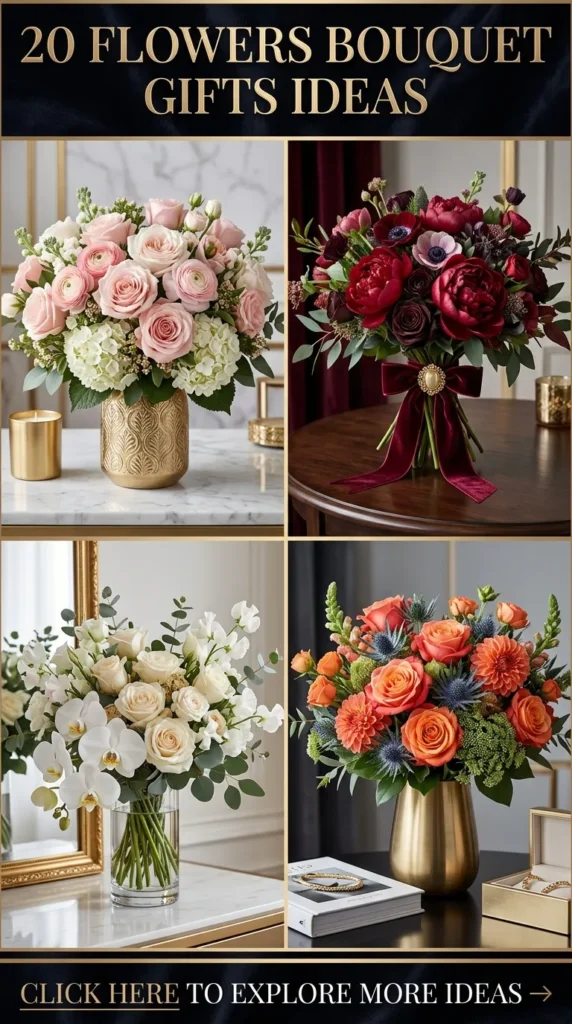
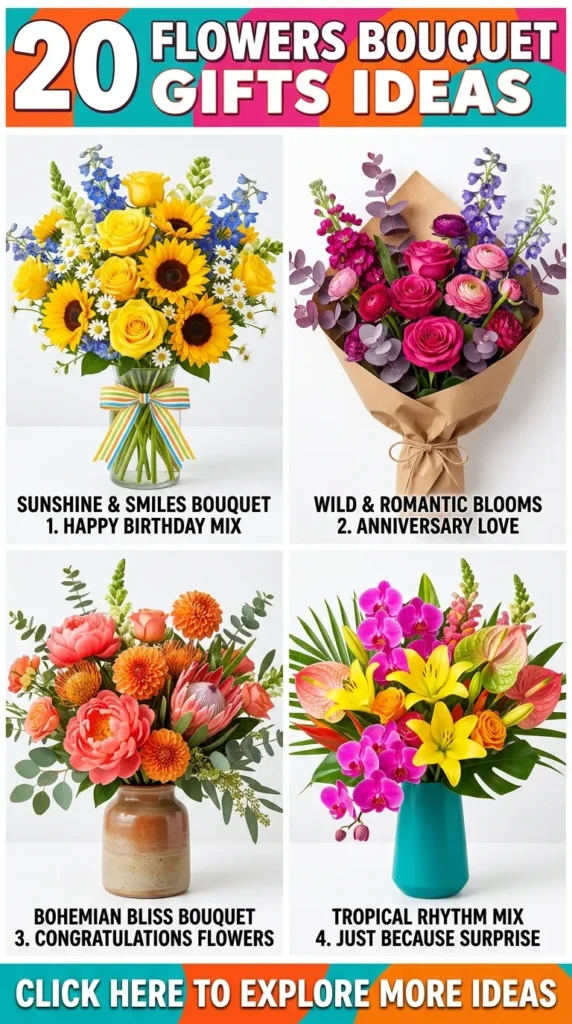
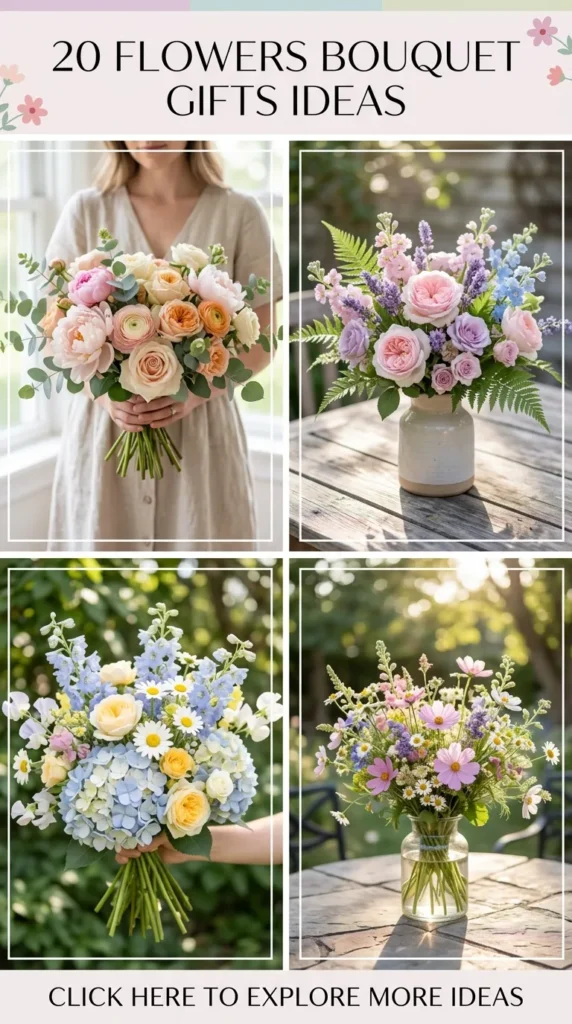
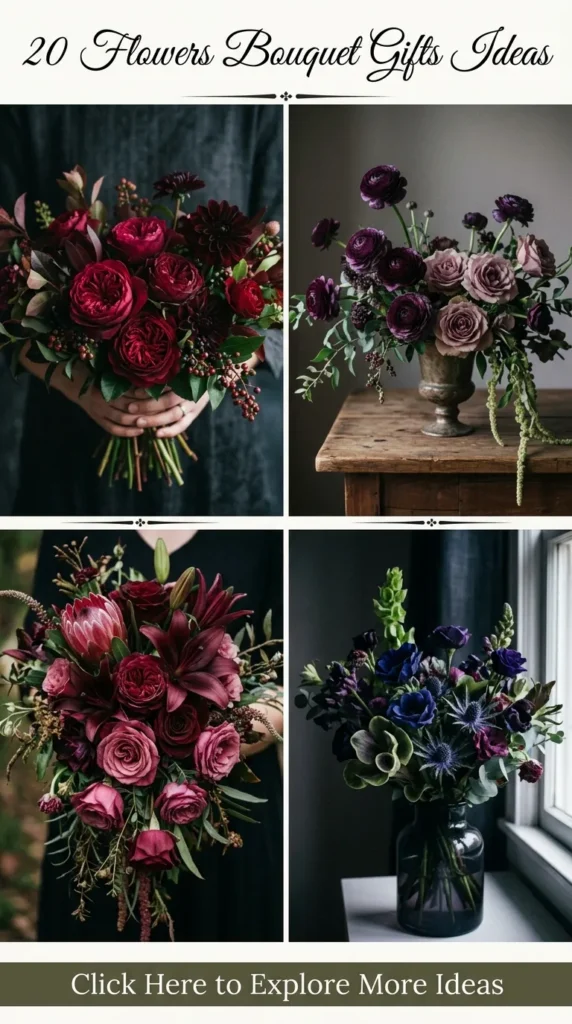
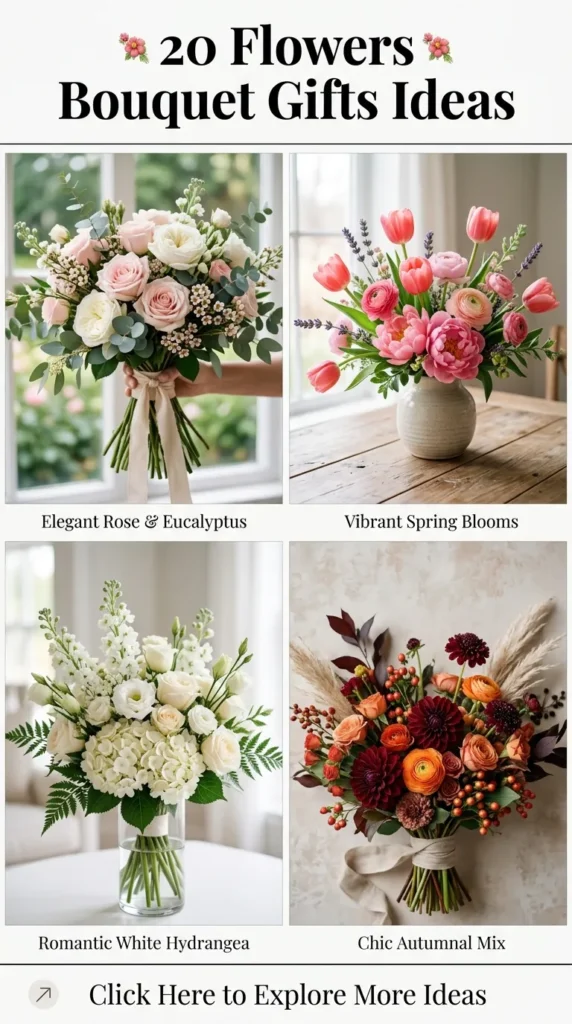
Floral gifting transforms simple botanical stems into deep, artistic expressions of affection, celebration, and mindful living. Whether you are assembling an intimate anniversary surprise, crafting a bohemian centerpiece for a dinner party, or styling modern organic arrangements for home decor content, a thoughtfully designed bouquet communicates emotions words often fail to capture.
This comprehensive guide details 20 curated floral aesthetics. Each concept breaks down the design philosophy, step-by-step assembly guides, professional styling secrets, and versatile variations to help you create unforgettable floral art.
1. The Vintage Victorian Secret Garden Bouquet
Introduction & Aesthetic Concept
The Vintage Victorian Secret Garden bouquet draws inspiration from 19th-century romantic poetry and wild, overgrown castle grounds. It evokes a sense of nostalgia, quiet luxury, and timelessness. Rather than looking stiff or tightly tailored, this bouquet mimics flowers plucked directly from a mist-covered courtyard at dawn. The composition relies heavily on soft muted tones, lush textures, layered petaling, and dangling, graceful botanical accents.
Materials & Color Palette
- Primary Stems: David Austin garden roses (Keira or Juliet varieties), dusty antique spray roses, heirloom double-petaled lilac, white ranunculus.
- Foliage & Texture: Cascading silver dollar eucalyptus, blooming jasmine vines, dusty miller, pale blush astilbe.
- Color Palette: Antique rose, soft mauve, pale sage green, warm ivory, and subtle tea-stained beige.
- Wrapping: Crinkled natural linen ribbon, ivory silk habotai, and matte parchment paper.
How to Assemble
- Stem Preparation: Strip all lower leaves, thorns, and side buds from the bottom two-thirds of every stem. Cut the base at a 45-degree angle under cool running water.
- Structural Base: Begin with three to four sturdy stems of silver dollar eucalyptus held in your non-dominant hand to create an asymmetrical green foundation.
- Core Blooms: Place your largest David Austin garden roses at the visual center, turning your hand slightly clockwise after each insertion to build a classic spiral hand-tied shape.
- Textural Weaving: Slot in stems of blush astilbe and antique spray roses between the focal blooms at varying heights to establish natural depth.
- Finishing Touches: Drape trailing jasmine vines along the lower left edge so they spill outward naturally. Secure the junction with green florist tape and conceal it with long, raw-edged frayed linen ribbon.
Pro Tips & Variations
- Hydration Technique: Garden roses are heavy drinkers; place them in warm water infused with floral food for two hours prior to arrangement to encourage full petal expansion.
- Modern Twist: Swap out lilac for dried lavender spikes to add a rich, calming fragrance and tactile variety.
- Petite Version: Scale the arrangement down to three focal roses surrounded entirely by sweet peas and baby jasmine vines for a minimalist bedside gift.

2. Parisian Chic Minimalist Monochrome Bouquet
Introduction & Aesthetic Concept
Parisian Chic celebrates the high-fashion philosophy of restrained elegance. Instead of blending multiple colors and textures, this concept focuses entirely on structural clarity, pristine lines, and monochromatic refinement. A singular floral species or a unified color family commands full focus, making it a favorite for modern urban aesthetics, bridal gifts, and upscale minimalist interiors.
Materials & Color Palette
- Primary Stems: French white tulips, crisp white calla lilies, or pure white open peonies.
- Foliage & Texture: Minimalist deep emerald salal leaves or folded aspidistra foliage (optional).
- Color Palette: Pure optic white, stark ivory, soft cream, and deep forest green stems.
- Wrapping: Thick black waterproof kraft paper, tissue underlay, and a wide black grosgrain ribbon.
How to Assemble
- Stem Alignment: Lay 15 to 20 French white tulips flat on your workspace. Gently align all bloom heads so they sit at a uniform or gently cascading staggered level.
- Spiral Binding: Hold the stems parallel or in a very tight spiral, keeping the flower heads clustered together in a tight, sculptural dome.
- Foliage Framing: Position folded aspidistra leaves along the outer rim to form an architectural collar around the base of the blooms.
- Wrapping: Wrap the stems in matte black craft paper, allowing the stark white blooms to rise dramatically above the dark border. Tie with a clean, flat grosgrain bow.
Pro Tips & Variations
- Tulip Manipulation: Tulips continue to grow toward light sources after cutting; trim stems slightly shorter than needed to keep the structural shape intact.
- Warm Neutral Variant: Execute this concept with single-variety café au lait dahlias or champagne carnations wrapped in crisp white paper.
- Stem Finishing: Cut the stems completely flat across the bottom so the bouquet can stand freely on its own base inside a shallow dish.

3. Warm Terracotta Boho Sunset Meadow
Introduction & Aesthetic Concept
Infused with earthy warmth, the Terracotta Sunset bouquet captures the golden glow of a desert late afternoon. It merges fresh garden blooms with sun-bleached dried florals, balancing wild, organic forms with rich, cozy tones. This bouquet feels artistic, free-spirited, and exceptionally well-suited for autumn gifts, housewarmings, and rustic events.
Materials & Color Palette
- Primary Stems: Terracotta cymbidium orchids, copper-toned chrysanthemums, toffee roses, burnt orange ranunculus.
- Foliage & Texture: Sun-bleached pampas grass, dried bunny tails, preserved ruscus, dried palm spears, seeded eucalyptus.
- Color Palette: Rust, burnt orange, warm sienna, honey mustard, desert sand, and muted copper.
- Wrapping: Camel-colored vegan suede ribbon, raw frayed terracotta silk, and textured recycled kraft wrap.
How to Assemble
- Base Framework: Start by constructing a dry, airy frame using two dried sun palm spears and small plumes of pampas grass.
- Layering Fresh Elements: Insert toffee roses and burnt orange ranunculus into the center of the dried foundation, keeping the fresh stems slightly recessed for visual depth.
- Focal Stems: Add terracotta cymbidium orchids on one side to break symmetry and introduce a modern, sculptural look.
- Airy Accents: Float preserved bunny tails and seeded eucalyptus around the edges at varying elevations. Bind firmly with natural jute twine and finish with raw silk ribbons.
Pro Tips & Variations
- Preservation Factor: Because this design contains hardy dried elements, the recipient can remove the fresh flowers once spent and keep the dried bouquet intact for months.
- Summer Variant: Introduce fresh coral charm peonies to brighten the palette while preserving the warm, earthy aesthetic.
- Texture Play: Mix velvety textures (like dried cockscomb) with smooth, glossy foliage for strong tactile contrast.

4. Japanese Ikebana-Inspired Asymmetrical Wrap
Introduction & Aesthetic Concept
Rooted in the ancient principles of Ikebana (Kadō), this bouquet focuses on line, shape, space, and minimalism. It avoids excessive mass and instead values the balance between empty space (ma) and sculptural floral branches. Every stem has an intentional direction, producing a dynamic, living sculpture that feels meditative, calm, and sophisticated.
Materials & Color Palette
- Primary Stems: Japanese flowering quince branches, single stem King Protea, or structural Anthuriums.
- Foliage & Texture: Equisetum (snake grass), Monstera leaf, blooming cherry blossom branches, Japanese maple sprigs.
- Color Palette: Muted celadon, blush, lacquer red, deep charcoal, and fresh bamboo green.
- Wrapping: Two-tone washi paper, natural bamboo cord, and minimalist folded wrapping styles.
How to Assemble
- Establish the Shin (Primary Line): Select an elongated, curving branch (such as quince or cherry blossom) that defines the height and primary direction of the piece.
- Establish the Soe (Secondary Line): Place a secondary stem, about two-thirds the height of the primary branch, angled harmoniously off to one side.
- Establish the Hikae (Tertiary Focal Point): Position your main structural bloom (like an anthurium or single garden peony) close to the base where the two main lines intersect.
- Architectural Wrapping: Fold structured washi paper geometrically around the back and sides, leaving the front open to display the graceful natural lines of the stems.
Pro Tips & Variations
- Negative Space: Resist the temptation to fill empty gaps with filler greens; empty space is essential to the design’s balance.
- Linear Styling: Gently warm branch stems with your fingers to subtly shape their natural curve before binding.
- Monochrome Ikebana: Use all-green elements—combining architectural monstera, weeping willow, and green trick dianthus—for a calm, sculptural display.

5. Moody Gothic Romance Noir Bouquet
Introduction & Aesthetic Concept
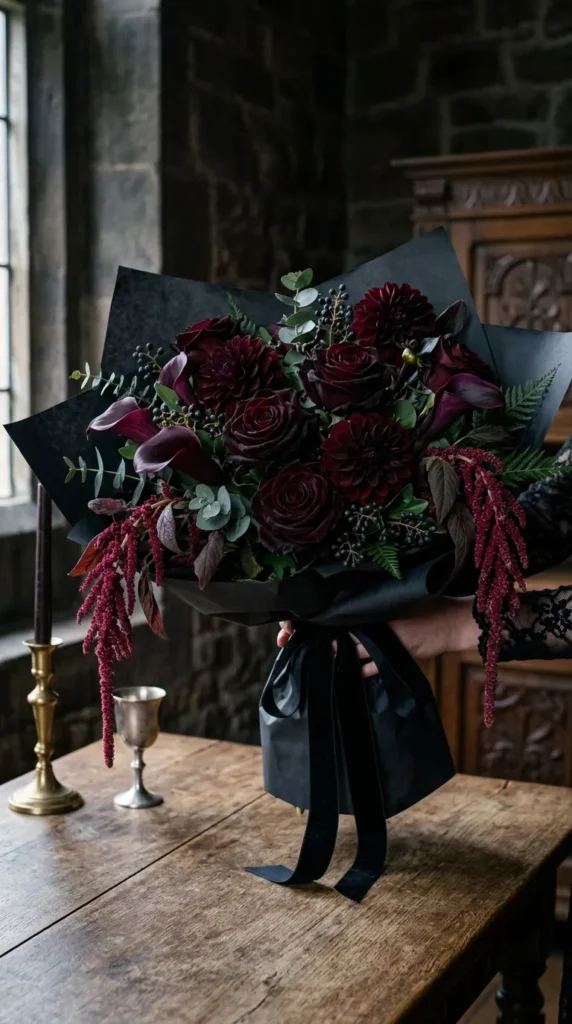
The Moody Gothic Romance bouquet explores dramatic, shadowy palettes and deep floral textures. Inspired by baroque still-life oil paintings and classic dark fantasy, this arrangement uses deep jewel tones, black-red blooms, and smoky foliage to convey passion, mystery, and theatrical beauty.
Materials & Color Palette
- Primary Stems: Black Baccara roses, deep purple calla lilies, dark plum dahlias, chocolate cosmos.
- Foliage & Texture: Smoke bush (Cotinus), dark purple agonis, black elderberry foliage, hanging amaranthus.
- Color Palette: Midnight black, velvety maroon, deep burgundy, dark plum, and antique bronze.
- Wrapping: Matte midnight black parchment paper, layered with dark plum organza and thick velvet ribbon.
How to Assemble
- Foundation: Gather dark agonis and burgundy smoke bush foliage to create an asymmetrical, shadowy base.
- Deep Core Placement: Cluster Black Baccara roses tightly in the center, framing them with rich plum dahlias.
- Linear Drama: Insert deep purple calla lilies so they rise cleanly out of the darker core, pointing in a unified direction.
- Cascading Shadows: Add deep red trailing amaranthus to the bottom perimeter, allowing it to spill gracefully downward. Bind with black florist wire and drape with a trailing velvet ribbon.
Pro Tips & Variations
- Contrast Highlighting: Insert two or three stems of antique copper roses or dusty mauve astrantia to keep the dark blooms from blending together in low light.
- Fruit Accents: Weave in small clusters of fresh blackberries or dark purple grapes on the vine for added baroque texture.
- Scent Profile: Pair with dark, resinous scents like clove or patchouli via scented mist on the outer packaging wrap.

6. Ethereal Cloud Cotton Candy Dream
Introduction & Aesthetic Concept
This light, dreamy aesthetic uses airy textures, pastel gradients, and delicate transitions to create a soft, cloud-like silhouette. Resembling a pastel dreamscape, it creates an uplifting, whimsical mood, making it a standout choice for baby showers, creative celebrations, and modern pastel interior styling.
Materials & Color Palette
- Primary Stems: Dyed pastel gypsophila (baby’s breath) in sky blue and lavender, soft pink hydrangeas, blush peonies.
- Foliage & Texture: White preserved asparagus fern, bleached bunny tails, iridescent floral netting.
- Color Palette: Powder pink, lavender mist, baby blue, soft buttercream, and pure white.
- Wrapping: Semi-sheer frosted cellophane, translucent organza wrap, and holographic satin ribbons.
How to Assemble
- Cloud Base: Cluster three to four stems of dyed pastel baby’s breath together to form an airy, rounded cloud shape.
- Core Nesting: Gently separate the baby’s breath branches and tuck large, soft pink hydrangeas and blush peonies inside so they appear to float inside the floral cloud.
- Textural Highlights: Disperse bleached white asparagus fern throughout the upper edges to produce a soft halo effect.
- Translucent Presentation: Wrap loosely with layered frosted translucent paper, securing it with an iridescent pastel ribbon that matches the blooms.
Pro Tips & Variations
- Spray-Painting Fillers: Use floral-safe color sprays to lightly tint white baby’s breath if naturally dyed stems are unavailable.
- Monochrome Cloud: Construct the entire arrangement out of pure white gypsophila and white hydrangeas for an all-white, modern cloud design.
- Floating Gift Integration: Conceal a small jewelry box inside the sheltered core of the floral cloud for a memorable reveal.


7. Mediterranean Citrus Garden Harvest Bouquet
Introduction & Aesthetic Concept
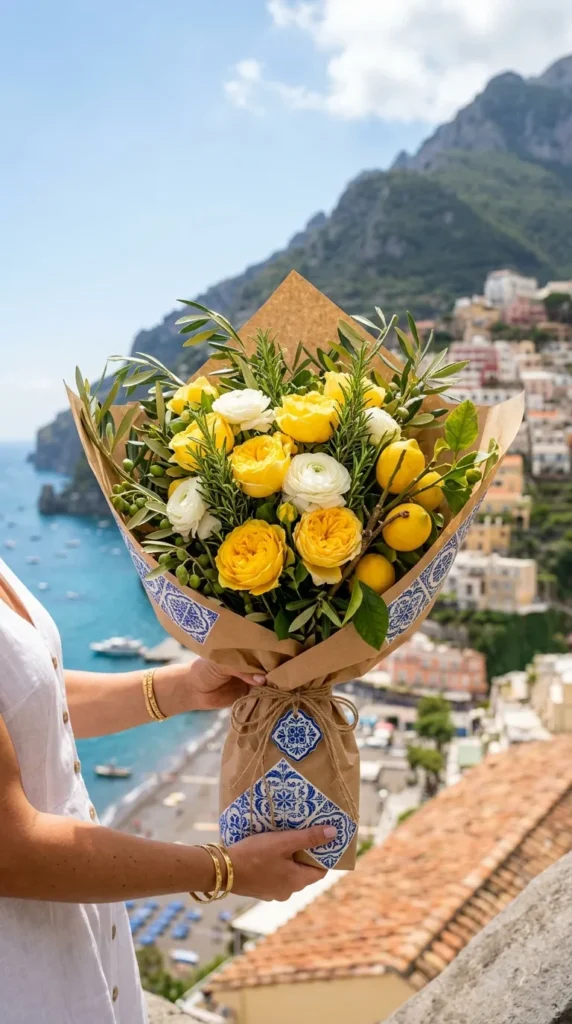
Channeling the sunny coastlines of the Amalfi and coastal Spain, the Mediterranean Citrus Harvest bouquet blends fresh flowers with whole citrus fruits and culinary herbs. It is vibrant, aromatic, and grounded in the sunny warmth of Mediterranean country life.
Materials & Color Palette
- Primary Stems: Yellow garden roses, white ranunculus, orange blossom sprigs, chamomile daisies.
- Foliage & Texture: Fresh olive branch foliage, Italian ruscus, culinary rosemary, whole small lemons/kumquats on floral picks.
- Color Palette: Sunkissed yellow, bright orange, olive green, cream, and sky blue accents.
- Wrapping: Natural brown kraft paper paired with blue-and-white Mediterranean majolica tile patterned tissue wrap and lemon-yellow cord.
How to Assemble
- Foliage Structure: Form an open, textured base using long, silver-green olive branches and rosemary sprigs.
- Citrus Mounting: Mount small whole lemons or kumquats onto wooden floral picks and insert them securely into the center of the greenery framework.
- Floral Weaving: Distribute bright yellow garden roses and white ranunculus naturally around the fruit accents.
- Meadow Accents: Fill remaining spaces with chamomile daisies to create a relaxed, hand-gathered look. Wrap in classic kraft paper accented with blue patterned tissue.
Pro Tips & Variations
- Fragrance Optimization: Gently crush a few rosemary leaves near the bouquet’s outer edge before gifting to release natural essential oils.
- Herb Expansion: Add flowering mint or flowering thyme stems to enhance both the aroma and wild, organic texture.
- Tuscan Shift: Replace lemons with small green fig clusters and swap yellow roses for deep peach garden roses for a rustic Tuscan variant.
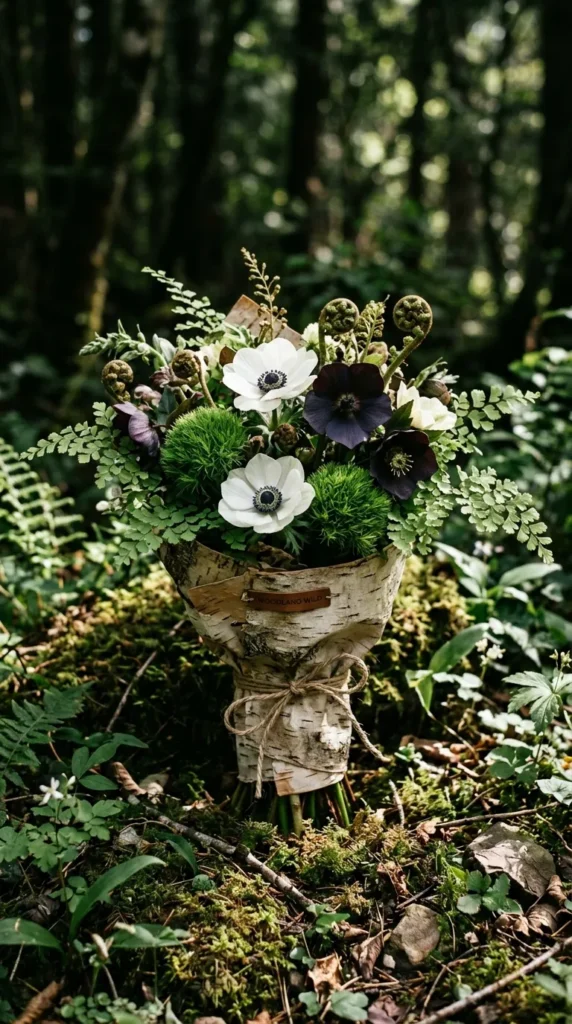
8. Woodland Forest Fern & Wildflower Meadow
Introduction & Aesthetic Concept
The Woodland Forest bouquet brings the untamed, peaceful magic of a mossy, sunlit forest floor into floral design. It prioritizes dynamic greens, varied textures, delicate forest blooms, and whimsical forest floor accents, making it ideal for nature lovers and outdoor aesthetic enthusiasts.
Materials & Color Palette
- Primary Stems: Hellebores, white anemones with black centers, green trick dianthus, astrantia, blue thistles (Eryngium).
- Foliage & Texture: Maidenhair fern, sword fern, tree moss sprigs, miniature pinecones, birch bark accents, fiddlehead ferns.
- Color Palette: Forest green, moss green, deep bark brown, clean white, slate blue, and pale wood tones.
- Wrapping: Real birch bark wraps, raw dark green burlap ribbon, and natural hemp string.
How to Assemble
- Green Foundation: Build a layered green base using sword ferns and delicate maidenhair ferns at varied heights.
- Focal Additions: Inset white anemones and hellebores slightly off-center to mimic flowers growing naturally along a woodland path.
- Botanical Details: Tuck green trick dianthus (resembling fresh moss cushions) and sculptural fiddlehead fern curls close to the bouquet base.
- Rustic Binding: Wrap the stems in flexible natural birch bark sheets, securing the structure tightly with thick hemp string.
Pro Tips & Variations
- Fern Hydration: Ferns lose moisture rapidly; mist them thoroughly with clean water and submerge their cut stems in deep water overnight before arranging.
- Mushroom Accent: Incorporate small dried botanical bracket mushrooms or faux wooden mushrooms on wire picks for an authentic woodland floor look.
- Alpine Meadow Variant: Add small alpine forget-me-nots and edelweiss blooms to shift the mood to a crisp mountain landscape.
9. Modern Tropical Architectural Sunrise Bouquet
Introduction & Aesthetic Concept
Moving away from classic tropical clichés, this contemporary concept treats bold, exotic blooms as sleek geometric sculptures. It emphasizes clean lines, striking angles, and vivid, warm colors, making it an impressive choice for corporate events, modern home entryways, and bold celebrations.
Materials & Color Palette
- Primary Stems: Birds of Paradise (Strelitzia), miniature pink pineapples, coral heliconias, orange anthuriums.
- Foliage & Texture: Fan palm leaves, monstera leaves, ti leaves, bamboo reed sections.
- Color Palette: Searing coral, electric orange, hot fuchsia, canary yellow, and glossy emerald green.
- Wrapping: Heavyweight matte emerald green paper, sharp geometric folds, and metallic copper wire ties.
How to Assemble
- Structural Foliage: Arrange two fan palm leaves and a folded ti leaf at the back to create a crisp, graphic backdrop.
- Geometric Blooms: Position Birds of Paradise stems at graduated vertical intervals to emphasize their clean linear form.
- Focal Weight: Place a miniature pink pineapple and a glossy orange anthurium near the lower center to ground the composition.
- Crisp Wrap: Fold thick emerald wrapping paper into crisp, angular folds around the stems, tying the base with metallic copper wire.
Pro Tips & Variations
- Leaf Gloss: Wipe tropical foliage with a drop of organic coconut oil on a microfiber cloth to produce a clean, healthy natural sheen.
- Longevity Advantage: Tropical flowers are long-lasting; change water every three days to enjoy the arrangement for up to three weeks.
- Minimalist Edition: Feature just one oversized King Anthurium against two structured monstera leaves for a high-impact, minimalist desk piece.
10. Pastel English High Tea Garden Posy
Introduction & Aesthetic Concept
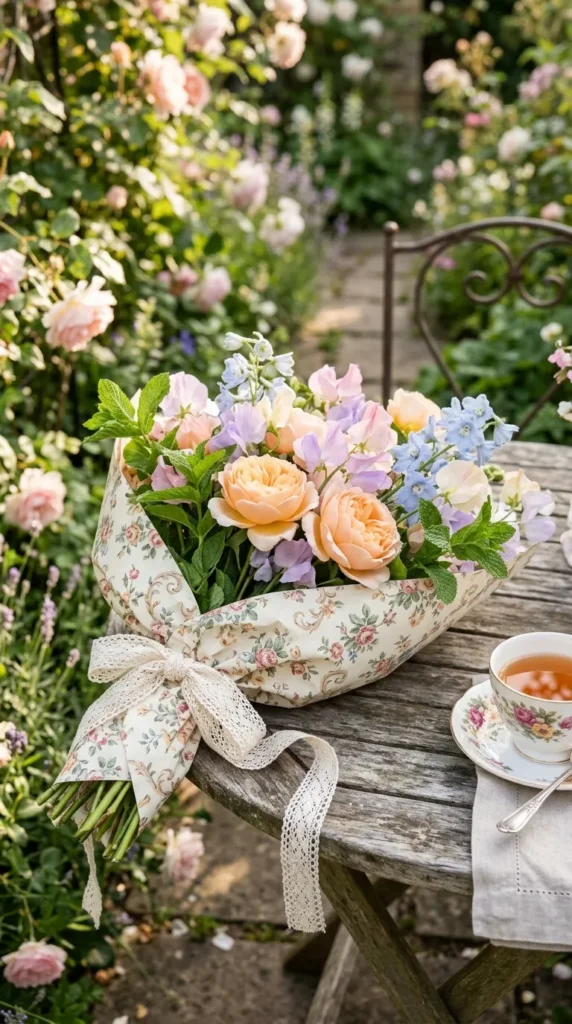
Inspired by classic afternoon tea in a sunlit Cotswolds garden, this posy is charming, sweet, and bursting with soft color. It uses delicate, fragrant blooms clustered together in a comfortable, hand-tied shape, evoking porcelain teacups, honeyed scones, and blooming garden paths.
Materials & Color Palette
- Primary Stems: Pink sweet peas, apricot garden roses, blue delphinium florets, scented stock, pale yellow freesia.
- Foliage & Texture: Apple mint sprigs, buxus leaves, alchemilla mollis (lady’s mantle).
- Color Palette: Buttercream, apricot blush, soft powder blue, baby pink, and minty green.
- Wrapping: Vintage floral chintz print paper, lace ribbon, and pearl-headed corsage pins.
How to Assemble
- Scented Core: Cluster sweet peas and freesia together in your hand to create a fragrant, textured center.
- Spiral Expansion: Gradually add apricot roses and lime-green alchemilla mollis around the core in an even spiral pattern.
- Border Framing: Surround the outer circle with apple mint sprigs to frame the blooms and add fresh fragrance.
- Classic Wrap: Wrap in vintage-style floral paper, fold the bottom neatly, and secure the neck with an off-white cotton lace ribbon.
Pro Tips & Variations
- Sweet Pea Longevity: Keep sweet peas away from direct sunlight and fruit bowls (which release ethylene gas) to prolong their delicate petals.
- Teacup Styling: Cut this bouquet short to fit inside an antique English fine bone china teacup as a tabletop display.
- Lavender Infusion: Substitute freesia with fresh english lavender spikes for a soft herbal twist.
11. Minimalist Scandinavian Bleached & Preserved Art
Introduction & Aesthetic Concept
Embodying Nordic design principles—simplicity, neutral beauty, and connection to natural forms—this fully preserved bouquet focuses on clean textures, bleached botanicals, and long-lasting forms. It needs no water, making it a sustainable, low-maintenance home decor gift.
Materials & Color Palette
- Primary Stems: Preserved bleached ruscus, dried star flowers (Glixia), bleached pampas grass, white dried lunaria (money plant).
- Foliage & Texture: Dried lagurus (bunny tails), natural skeleton leaves, preserved white eucalyptus.
- Color Palette: Pure chalk white, ivory, wheat beige, bone, and soft oat tones.
- Wrapping: Raw unbleached linen fabric square, simple natural leather cord, and minimalist kraft label.
How to Assemble
- Backdrop Construction: Form a neutral background using three stems of bleached preserved ruscus and airy lunaria seed pods.
- Texture Layering: Add small clusters of white star flowers and soft lagurus grass at the center for a tactile, layered feel.
- Shape Balancing: Adjust stem heights so the translucent lunaria discs catch the light across different levels.
- Linen Wrap: Lay the arrangement across a square of raw unbleached linen, fold the bottom up, wrap the sides across, and tie securely with a thin leather tie.
Pro Tips & Variations
- Dust Maintenance: Preserved arrangements stay fresh for over a year; gently blow away dust using a hairdryer on its lowest, coolest setting.
- Translucent Lunaria: Pick lunaria stems whose silvery seed membranes are clear for shimmering texture.
- Dark Contrast Accent: Add two stems of dried black nigella pods to introduce subtle Scandinavian monochrome contrast.
12. Moody Dutch Master Baroque Still-Life Bouquet
Introduction & Aesthetic Concept
This arrangement draws direct inspiration from 17th-century Dutch Master oil paintings (such as works by Rachel Ruysch and Jan de Heem). It embraces sweeping curves, dramatic open blooms, deep color tones, and asymmetric, dynamic layouts that celebrate flowers at every stage of growth.
Materials & Color Palette
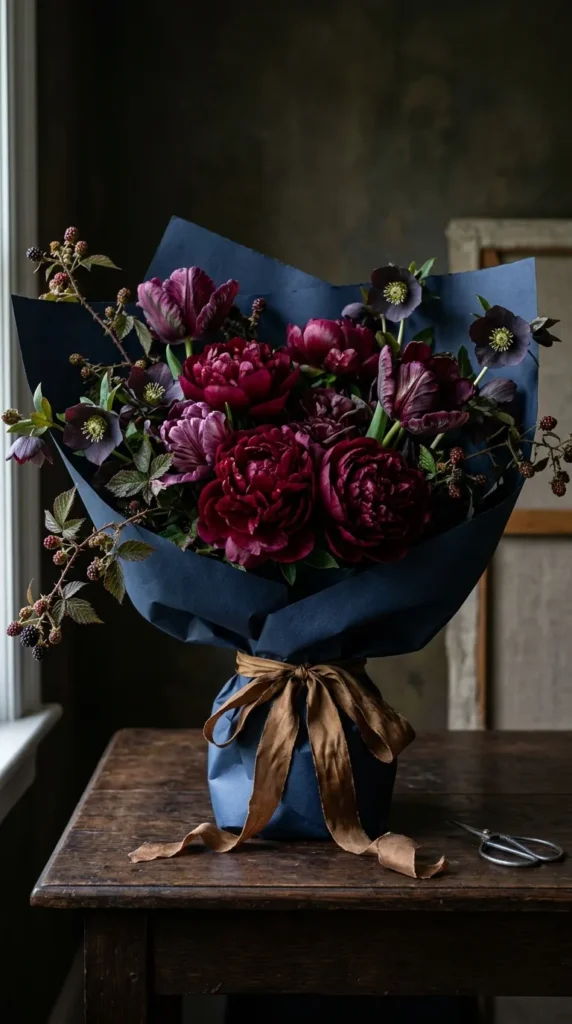
- Primary Stems: Parrot tulips, burgundy ranunculus, open tree peonies, dark purple hellebores, striped carnations.
- Foliage & Texture: Ivy vines, blooming blackberry brambles, weeping plum foliage, seeded eucalyptus.
- Color Palette: Rich wine, gold, midnight purple, bruised plum, warm ochre, and deep verdant green.
- Wrapping: Heavy matte navy blue wrapping paper, copper tissue accents, and raw-edge satin ribbons.
How to Assemble
- Dramatic Spine: Place a long, arching branch of dark plum foliage or drooping parrot tulips to establish a sweeping S-curve silhouette.
- Baroque Center: Position large, fully opened peonies and deep burgundy ranunculus low in the center to create a rich, heavy visual core.
- Airy Stems: Weave stems of striped carnations and hellebores outward along the outer curves, letting them droop and reach naturally.
- Finishing Flourish: Wrap in heavy navy paper, leaving the top open and wild, tied with an antique gold or bronze satin ribbon.
Pro Tips & Variations
- Letting Blooms Open: Allow peonies and tulips to sit at room temperature for a day before assembling so they reach their dramatic, open stage.
- Dramatic Curvature: Gently shape tulip stems by hand to accentuate their organic, dynamic curves.
- Pomegranate Inclusion: Secure a small, split-open pomegranate onto a floral stake and tuck it into the base to mirror traditional still-life paintings.
13. Celestial Starlight Midnight & Silver Bouquet
Introduction & Aesthetic Concept
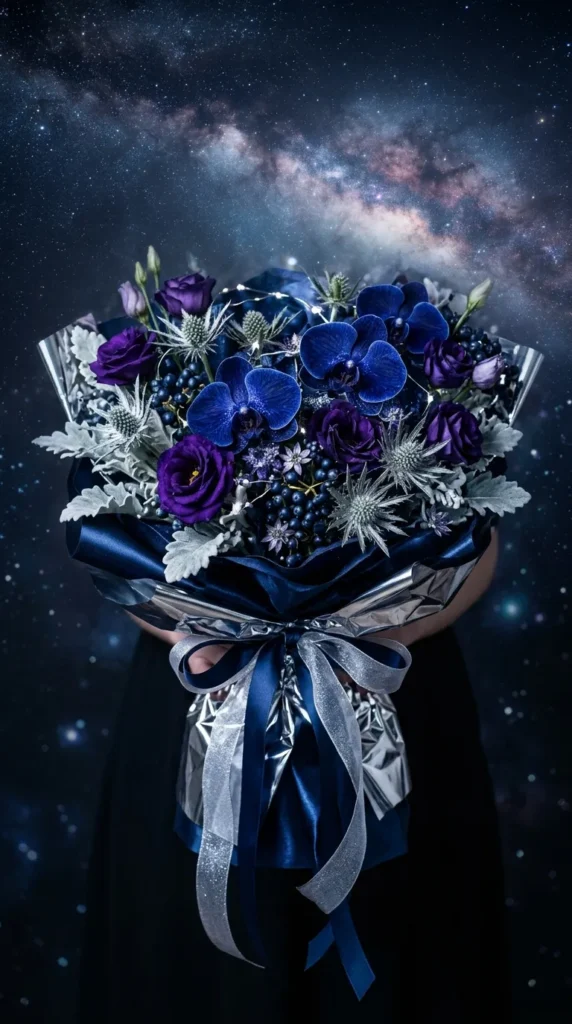
The Celestial Starlight bouquet draws inspiration from midnight skies, glowing nebulae, and cool starlight. It pairs deep navy, violet, and indigo blossoms with shimmering silver foliage, creating a cool-toned, magical gift for milestone evenings and celebrations.
Materials & Color Palette
- Primary Stems: Royal blue dyed orchids, deep violet anemones, dark purple lisianthus, blue sea holly (Eryngium).
- Foliage & Texture: Silver dusty miller, preserved silver-sprayed eucalyptus, dried starflowers, metallic thistle.
- Color Palette: Midnight navy, indigo, deep galaxy purple, metallic silver, and frosted white.
- Wrapping: Metallic silver chrome paper layered beneath matte midnight navy craft wrap, tied with silver organza ribbon.
How to Assemble
- Silver Underlay: Fan out dusty miller leaves and silver eucalyptus to form a frosted foundation.
- Galaxy Core: Group deep purple lisianthus and navy blue orchids into the center to mimic the depth of a night sky.
- Starlight Accents: Scatter spiky blue sea holly and white starflowers around the edges to resemble sparkling stars.
- Layered Presentation: Wrap in metallic silver foil covered by midnight blue paper with angled edges, tied with a sheer silver ribbon.
Pro Tips & Variations
- Fairy Light Integration: Weave a delicate strand of micro LED warm-white fairy lights through the stems for evening gifting.
- Natural Blues: For an all-natural blue palette, use sea holly, blue hydrangeas, tweedia, and delphinium stems without artificial dyes.
- Winter Variant: Add frosted white pinecones and silver-sprayed cedar sprigs for a festive holiday gift.
14. Sweet Strawberry & Cream Romantic Gathering
Introduction & Aesthetic Concept
Soft, inviting, and effortlessly romantic, the Strawberry & Cream bouquet balances gentle cherry and strawberry tones with rich dairy creams and warm ivories. It is cheerful, approachable, and well-suited for anniversaries, birthdays, and thoughtful everyday gestures.
Materials & Color Palette
- Primary Stems: Strawberry-pink ranunculus, cream garden roses, blush carnations, pink astilbe, white cosmos.
- Foliage & Texture: Light green variegated pittosporum, budding spirea, pale eucalyptus.
- Color Palette: Strawberry pink, cream, marshmallow white, soft peach, and warm pastel green.
- Wrapping: Layered baby-pink matte paper, cream parchment underlay, and a strawberry-red velvet ribbon.
How to Assemble
- Soft Center: Gather three cream garden roses and three strawberry-pink ranunculus into a balanced spiral cluster.
- Textural Blending: Tuck pink astilbe and fluffy blush carnations into the gaps to soften the transitions between larger blooms.
- Delicate Outer Halo: Place white cosmos around the outer border so their delicate petals dance lightly above the fuller flowers.
- Velvet Finish: Wrap in layered cream and pink paper, securing the stem base with a strawberry-red velvet ribbon bow.
Pro Tips & Variations
- Ranunculus Support: Ranunculus stems are hollow; insert a thin wooden skewer into weak stems if they need extra support.
- Berry Variant: Add real hypericum berries in soft pink and ivory to echo the fruit-inspired theme.
- Petite Posy: Assemble a small, pocket-sized version using only spray roses and cosmos for a sweet desk gift.


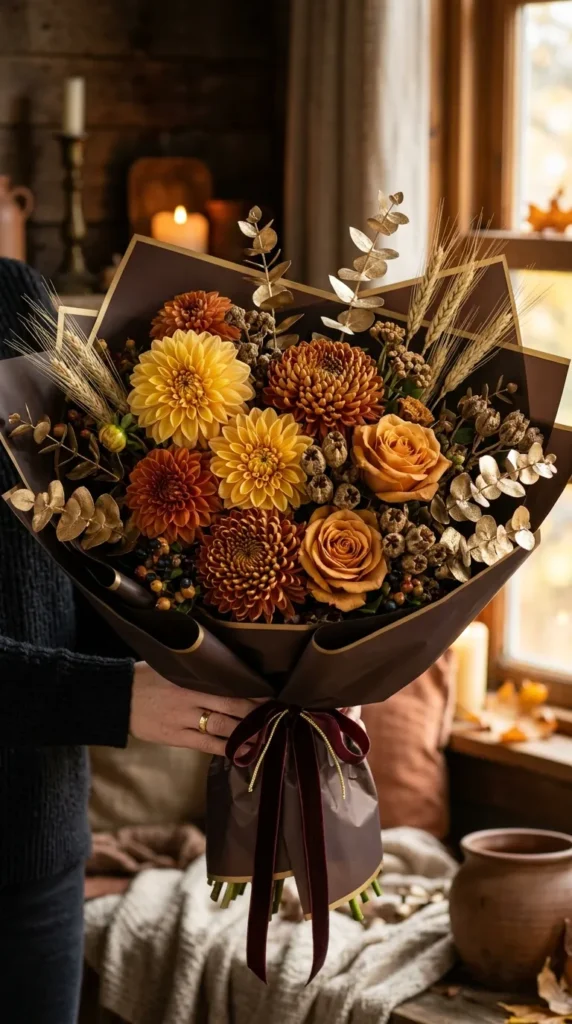
15. The Gilded Monarch Autumn Harvest Symphony
Introduction & Aesthetic Concept
The Gilded Monarch bouquet celebrates the richness of late autumn. Combining golden yellows, warm ambers, bronze tones, and gilded accents, this design feels opulent, warm, and comforting—reminiscent of golden hour light stretching across harvested fields.
Materials & Color Palette
- Primary Stems: Golden yellow dahlias, bronze chrysanthemums, amber toffee roses, yellow safflowers.
- Foliage & Texture: Preserved gilded gold eucalyptus, dried oak leaves, wheat stalks, burgundy hypericum berries.
- Color Palette: Metallic gold, warm amber, mustard yellow, rich bronze, and deep maple red.
- Wrapping: Textured dark chocolate kraft paper lined with gold leaf tissue, tied with a bronze satin ribbon.
How to Assemble
- Foliage Base: Create an open, textured backdrop using dried oak leaves and wheat stalks.
- Focal Stems: Add golden dahlias and bronze chrysanthemums at graduated heights through the center.
- Gilded Accents: Weave preserved gold-painted eucalyptus branches through the arrangement to catch the light.
- Wrap & Tie: Wrap in rich chocolate kraft paper with gold tissue peeking out at the edges, tied with a smooth bronze ribbon.
Pro Tips & Variations
- Gilding Leaves: Lightly coat preserved eucalyptus using metallic gold spray paint from a 12-inch distance for an even, subtle sheen.
- Sunflower Focus: Swap dahlias for dark-centered heirloom teddy bear sunflowers for a warm, fuzzy tactile element.
- Feather Accent: Add natural pheasant feathers along the back for an authentic countryside harvest look.
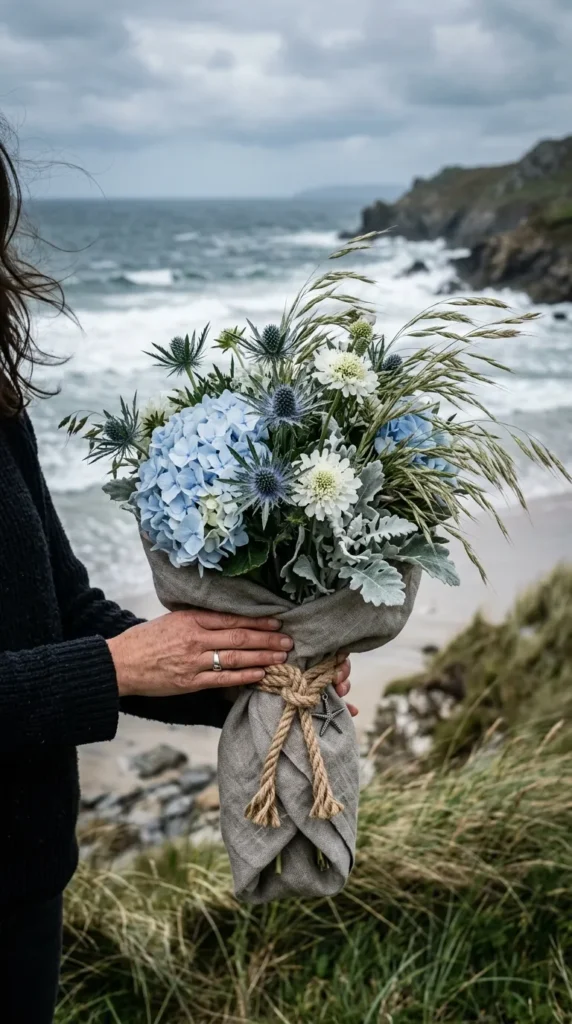
16. The Wild Coastal Ocean Mist Bouquet
Introduction & Aesthetic Concept
Inspired by windswept dunes and cool ocean breezes, this coastal arrangement captures the calm of the sea. It pairs soft slate blues, seafoam greens, sandy tones, and ocean textures, avoiding bright tropical motifs in favor of a serene, temperate seaside mood.
Materials & Color Palette
- Primary Stems: Pale blue hydrangeas, white sea holly (Eryngium), slate blue tweedia, white scabiosa.
- Foliage & Texture: Sea oats, blue spruce tips, dusty miller, bleached sea fan accents, dried lagurus (bunny tails).
- Color Palette: Seafoam blue, slate, ocean foam white, sandy beige, and driftwood gray.
- Wrapping: Driftwood-gray woven linen wrap, secured with nautical jute rope and raw cotton ribbon.
How to Assemble
- Hydrangea Cloud: Place a full, pale blue hydrangea in the center to form a soft, rolling ocean-wave foundation.
- Coastal Textures: Insert spiky white sea holly and white scabiosa blooms around the hydrangea to evoke sea spray.
- Dune Accents: Add sea oats and dried bunny tails around the outer edges so they sway naturally with movement.
- Nautical Binding: Wrap the stems in gray linen and tie securely with layered nautical jute rope.
Pro Tips & Variations
- Hydrangea Hydration: Dip freshly cut hydrangea stems into alum powder before putting them into water to prevent premature wilting.
- Shell Detail: Tie a small drilled piece of sea glass or a natural seashell onto the jute knot as a keepsake charm.
- Deep Ocean Variant: Add deep indigo delphinium stems to shift the mood toward stormy deep-sea waters.
17. The Monochromatic Emerald Forest Luxe Wrap
Introduction & Aesthetic Concept
The Emerald Forest bouquet relies entirely on foliage textures and shades of green. It highlights the beauty of botanical leaf shapes, contrasting glossy surfaces, velvety ferns, and structural branches without relying on standard colorful flower petals.
Materials & Color Palette
- Primary Stems: Green trick dianthus, green anthuriums, green cymbidium orchids, bells of Ireland.
- Foliage & Texture: Monstera leaves, maidenhair fern, umbrella fern, glossy camellia leaves, hanging green amaranthus.
- Color Palette: Deep emerald, jade, mint green, forest moss, and bright lime accents.
- Wrapping: Deep moss-green waterproof florist paper, tied with wide emerald double-faced satin ribbon.
How to Assemble
- Structural Backdrop: Fan out monstera and glossy camellia leaves to establish a rich, green background.
- Architectural Stems: Insert tall bells of Ireland to provide vertical height and sculptural interest.
- Core Clustering: Group green anthuriums and green trick dianthus near the center to establish contrasting textures.
- Draping Touches: Let hanging green amaranthus drape over the front edge. Wrap cleanly in moss-green paper and finish with an emerald satin ribbon.
Pro Tips & Variations
- Texture Balance: Because the color palette is unified, mix at least four distinct leaf textures (matte, glossy, spiky, and ruffled) to maintain visual depth.
- White Floral Variant: Add three white calla lilies to shift the look into an upscale, crisp botanical style.
- Longevity: All-green arrangements typically outlast mixed flower bouquets by several days; replace water every four days.
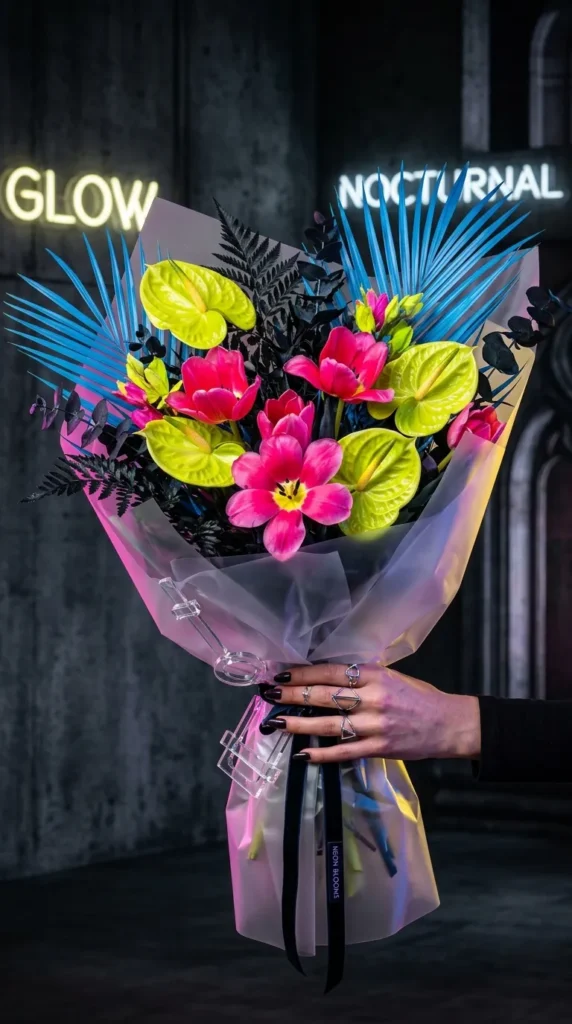
18. The Modern Abstract Neon Bloom Contrast
Introduction & Aesthetic Concept
Bold, artistic, and boundary-pushing, this aesthetic draws inspiration from modern pop art and high-fashion editorial styling. It pairs saturated neon colors with unusual botanical forms to make a vibrant, energetic statement.
Materials & Color Palette
- Primary Stems: Neon reflexed tulips, hot pink nerine lilies, electric blue spray-tinted palms, chartreuse anthuriums.
- Foliage & Texture: Spray-tinted neon monstera leaves, painted structural twigs, bleached rush stems.
- Color Palette: Electric cobalt, neon pink, acid chartreuse, vibrant orange, and clean white.
- Wrapping: Translucent matte PVC vinyl wrap paired with neon acrylic ties and bold graphic printed tags.
How to Assemble
- Painted Foliage Foundation: Place a single spray-tinted electric blue palm leaf at the back as a colorful canvas.
- Reflexed Blooms: Gently reflex the petals of hot pink tulips (folding them backward) and place them at the visual center.
- Graphic Contrast: Angle chartreuse anthuriums opposite the pink blooms to generate bold color tension.
- Futuristic Wrapping: Wrap in translucent matte PVC vinyl and bind with a neon acrylic tie.
Pro Tips & Variations
- Petal Reflexing: Work with room-temperature tulips; gently press the base of each outer petal upward with your thumb to fold it outward cleanly.
- Controlled Saturation: Balance bright neon tones with clean white stems or clear wrapping to keep the composition cohesive.
- Pastel-Neon Mix: Pair electric neon pink nerines with soft pastel blue tweedia for an appealing high-contrast look.
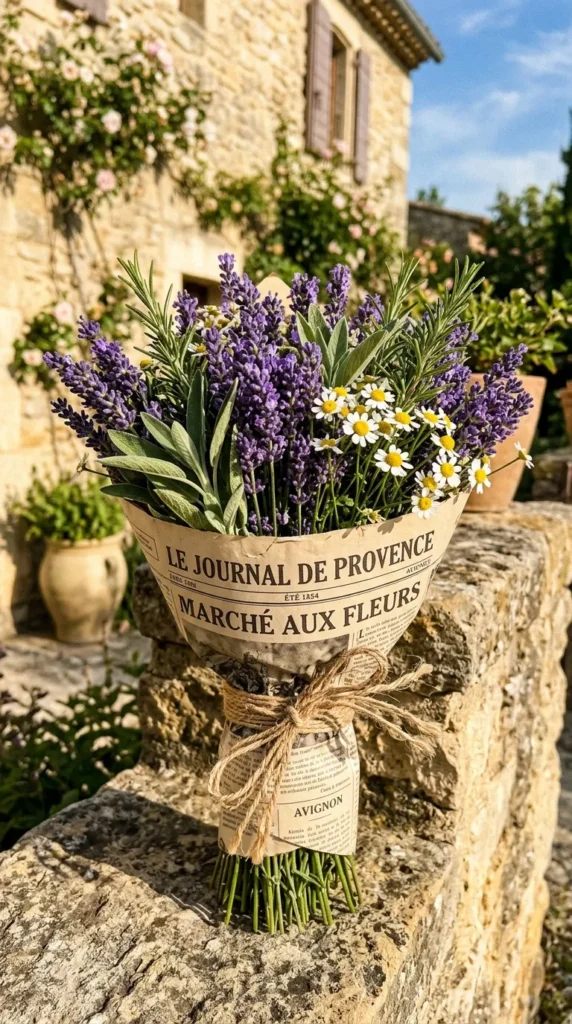
19. The Scented French Lavender & Herb Provence Bundle
Introduction & Aesthetic Concept
Transporting the senses directly to the sunlit fields of southern France, this bundle focuses on soothing, natural herbal aromatics. It looks rustic and effortless, prioritizing fragrant culinary herbs and calming lavender over formal garden flowers.
Materials & Color Palette
- Primary Stems: Fresh English lavender, blooming purple salvia, white waxflowers, chamomile sprigs.
- Foliage & Texture: Silver-grey eucalyptus, culinary sage, sweet basil branches, fresh rosemary, thyme sprigs.
- Color Palette: French lavender purple, soft silver green, herbal sage, crisp white, and earthy twine brown.
- Wrapping: Authentic vintage French newsprint wrap or unbleached linen fabric, bound with raw twisted jute twine.
How to Assemble
- Herbal Base: Gather rosemary, culinary sage, and silver-grey eucalyptus into an aromatic hand-tied bouquet.
- Lavender Density: Add dense clusters of fresh English lavender throughout the center and top of the herbs.
- Meadow Accents: Weave small sprigs of white waxflower and chamomile among the purple spikes for balance.
- French Country Wrap: Roll in vintage newsprint wrap, leaving stems exposed at the bottom, and tie with natural jute twine.
Pro Tips & Variations
- Drying Potential: Hang this bouquet upside down in a cool, dark room after gifting to dry it into a long-lasting herbal bundle.
- Kitchen Styling: Place near a sunny kitchen window so natural warmth releases the essential oils into the room.
- Citrus Mint Variant: Add blooming peppermint stems and lemon verbena for an even brighter, uplifting fragrance.
20. The Grand Royal Peony & Champagne Velvet Cloud
Introduction & Aesthetic Concept
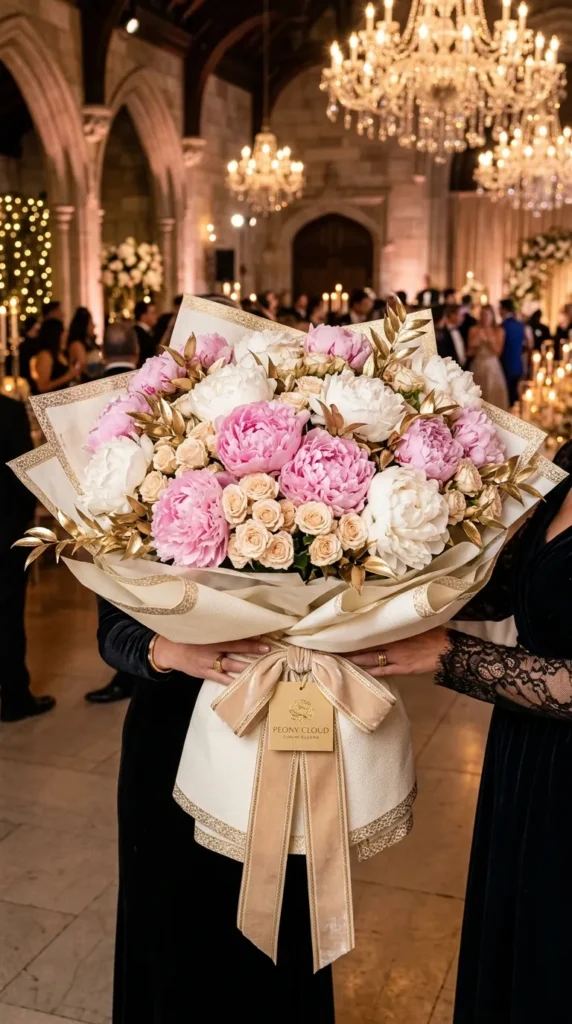
The Grand Royal Peony bouquet represents classic luxury and abundance. Built with oversized blooms, lush layering, and warm champagne undertones, this arrangement is designed to make a grand, unforgettable impression for major milestones, proposals, and luxury celebrations.
Materials & Color Palette
- Primary Stems: Sarah Bernhardt pink peonies, Duchesse de Nemours white peonies, champagne spray roses, white ranunculus.
- Foliage & Texture: Preserved champagne-sprayed ruscus, white astilbe, silver dollar eucalyptus.
- Color Palette: Blush pink, champagne gold, creamy ivory, warm pearl, and soft dusty green.
- Wrapping: Multi-layered heavy ivory waterproof wrap with gold trim, tied with an extra-wide champagne velvet ribbon.
How to Assemble
- Voluminous Foundation: Group silver dollar eucalyptus and white astilbe into a wide, supportive base.
- Peony Dome: Arrange Sarah Bernhardt and white peonies in a spiraling, symmetrical dome, ensuring every flower has space to fully expand.
- Champagne Highlights: Weave champagne spray roses and white ranunculus into the outer layers for subtle color shifts.
- Luxe Packaging: Envelop with heavy gold-trimmed ivory paper, pleating the bottom neatly and tying with a heavy champagne velvet ribbon.
Pro Tips & Variations
- Peony Opening Trick: If peony buds are closed, trim their stems with warm water and place them in a bright, warm room for four hours to speed up opening.
- Monochrome White: Use exclusively white peonies and ivory ranunculus wrapped in white silk for a clean, timeless bridal look.
- Rose Gold Variant: Swap champagne spray roses for soft blush-gold varieties and use rose-gold velvet ribbon.
Complete Floral Care & Styling Masterclass
To ensure your handmade bouquet stays vibrant and fresh for as long as possible, follow these professional post-assembly care practices:
1. Water Prep & Conditioning
Always use lukewarm water mixed with commercial floral food for fresh-cut stems. Floral food supplies essential nutrients, maintains balanced pH levels, and prevents bacterial growth in the vase.
2. Stem Trimming Techniques
Trim stems at a 45-degree angle using sharp floral shears or a clean craft knife rather than dull household scissors, which crush the botanical vascular system. Re-trim stems by half an inch every two days to maintain clean water absorption.
3. Ideal Display Environment
Keep fresh bouquets away from direct sunlight, heating vents, air conditioning drafts, and fruit bowls. Ripening fruits (especially bananas and apples) release ethylene gas, which significantly speeds up flower aging and petal loss.